When to Call Someone
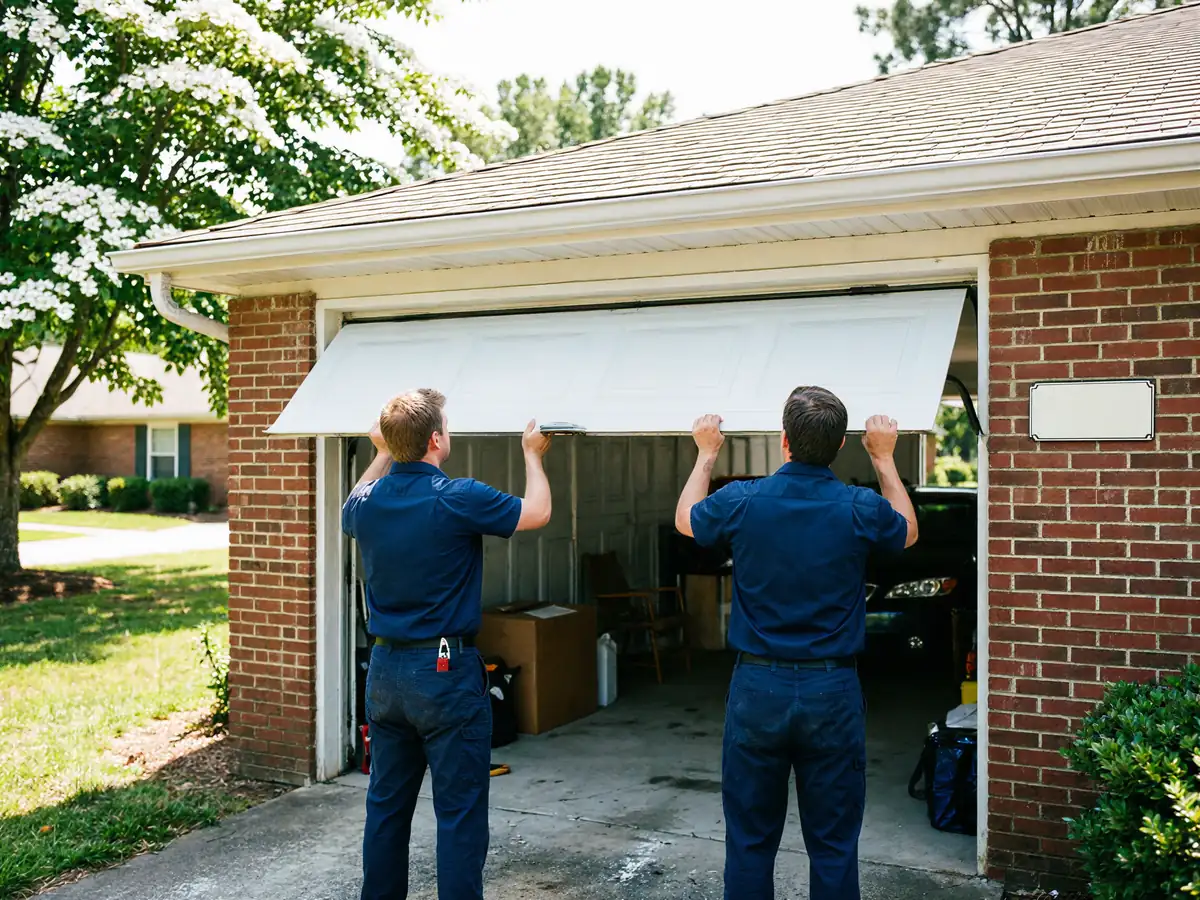
Call when the door won't move, moves unevenly, or makes a bang and then stops
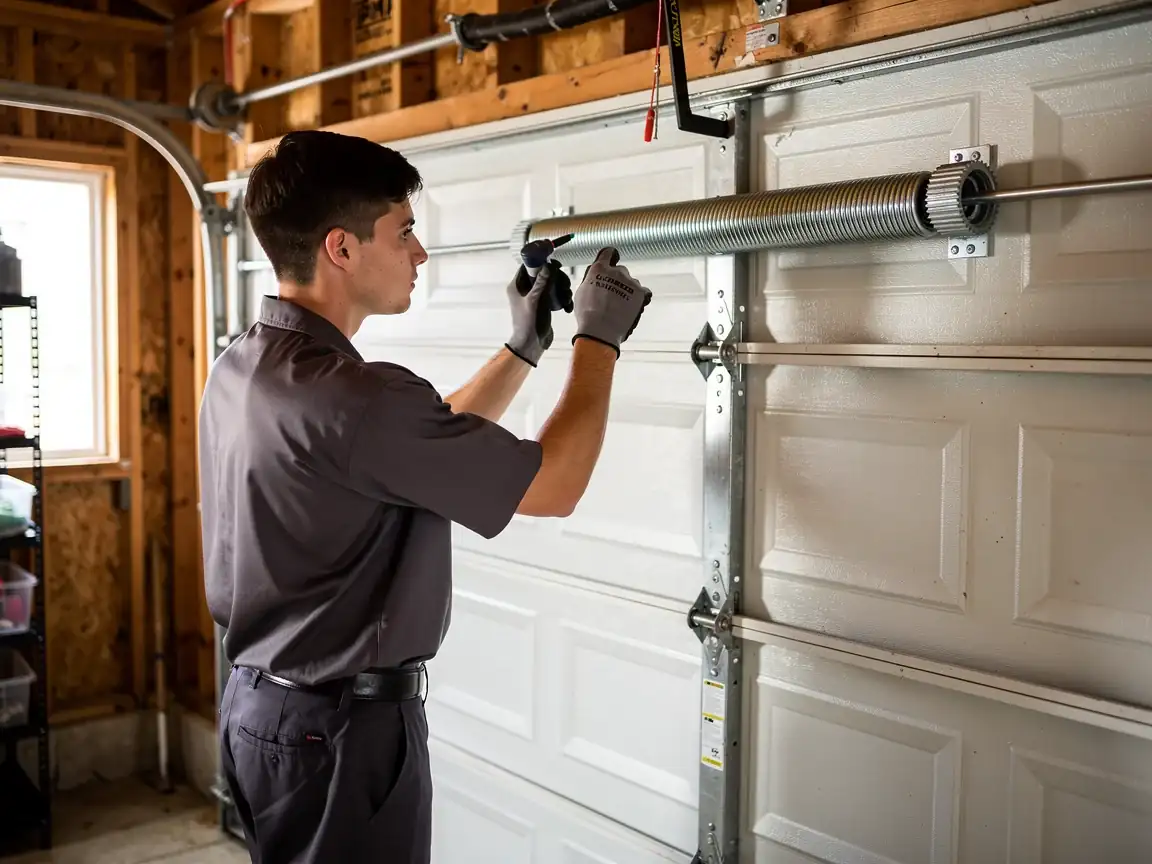
Those are spring and cable problems, and they're not a do-it-yourself fix - a wound torsion spring under tension can break a hand. Call too if the opener runs but the door doesn't lift more than a few inches; that's usually a spring that's lost tension, not the opener itself.
A lot of the houses in this service area date to the 1975-1992 run
Which puts a good share of original springs and openers well past the point anyone should trust them. If your door was installed with the house, it's already outlived the cycle count most torsion springs are rated for. You don't need to know the cycle number - you just need to know that a 40-plus-year-old spring isn't a maybe, it's a when.
We also get calls for doors that work fine but sound rough
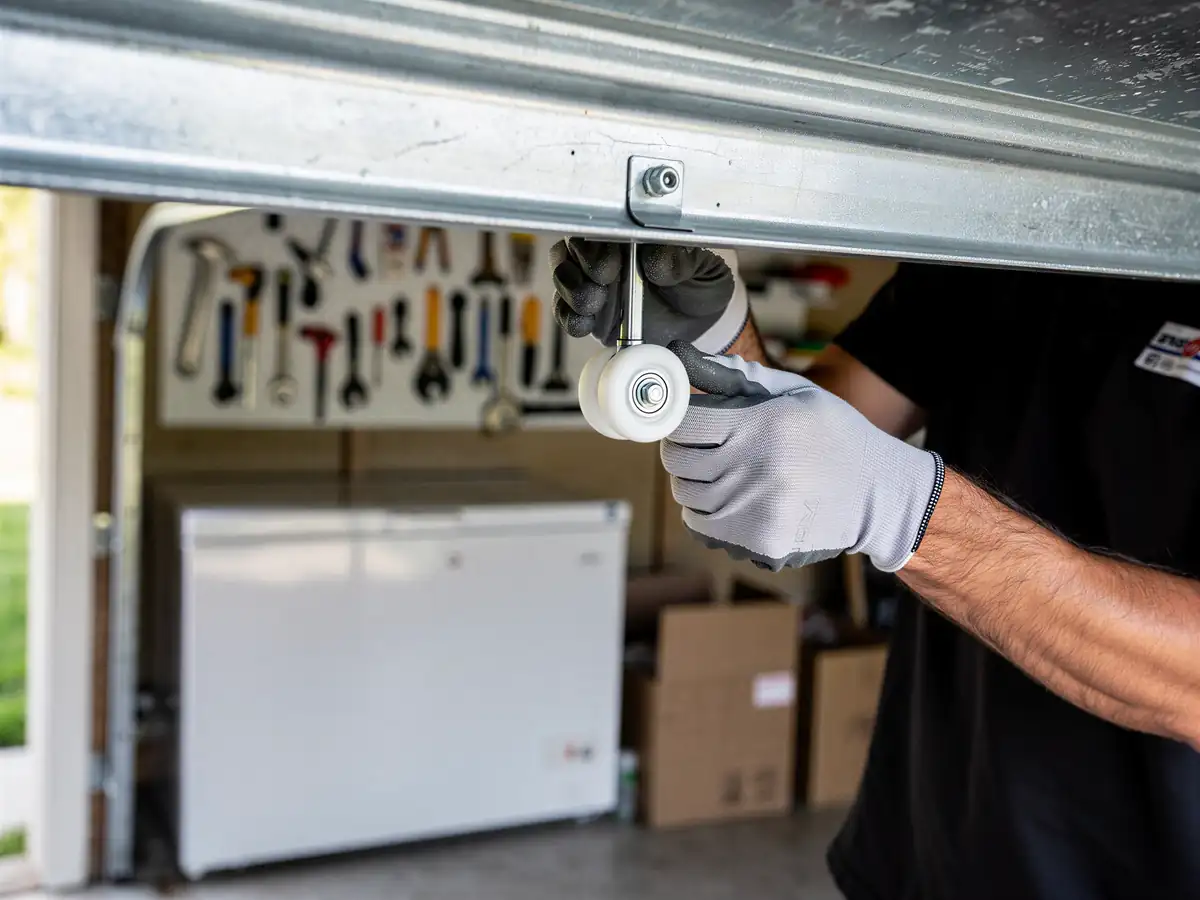
Grinding rollers, a track that's pulled from the wall, a panel that's started to bow. Those aren't emergencies, but they don't get better waiting.
Checking It Yourself
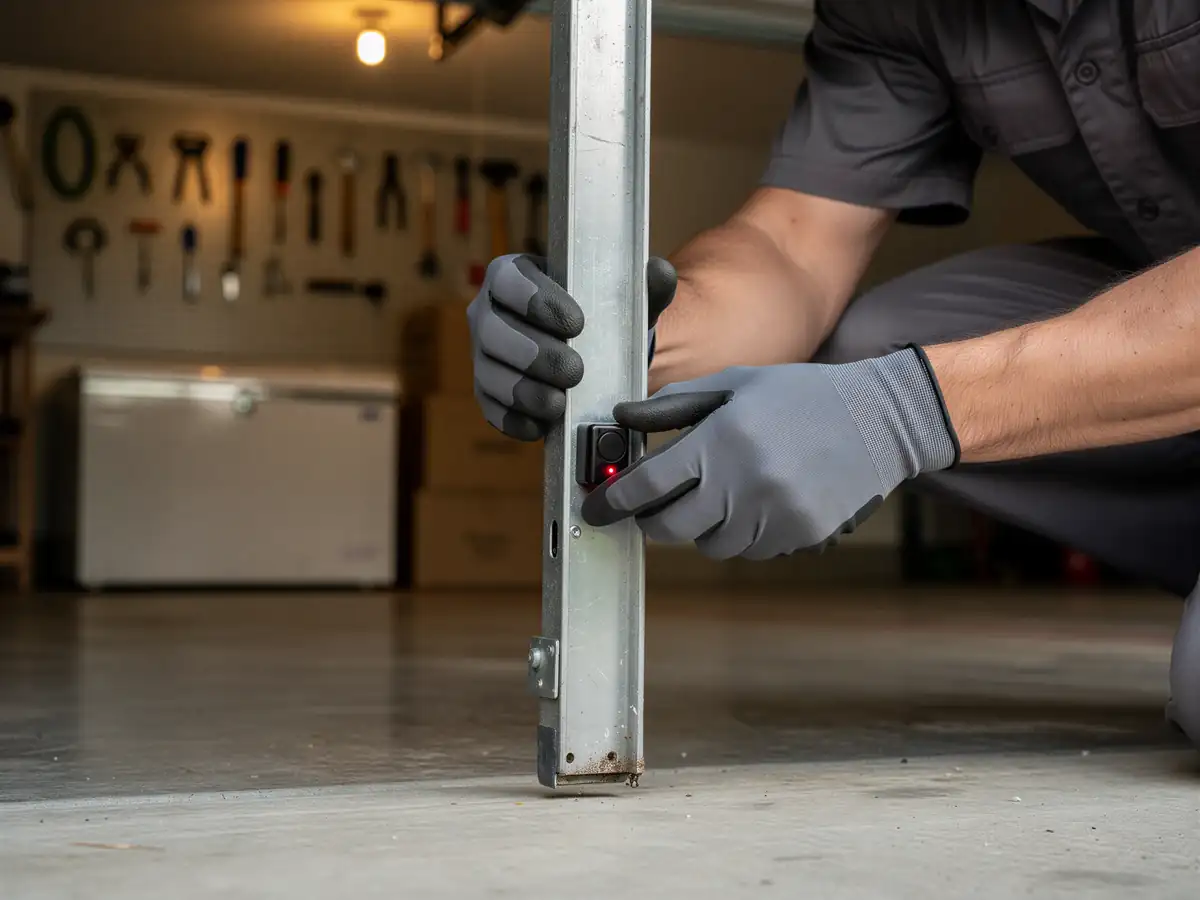
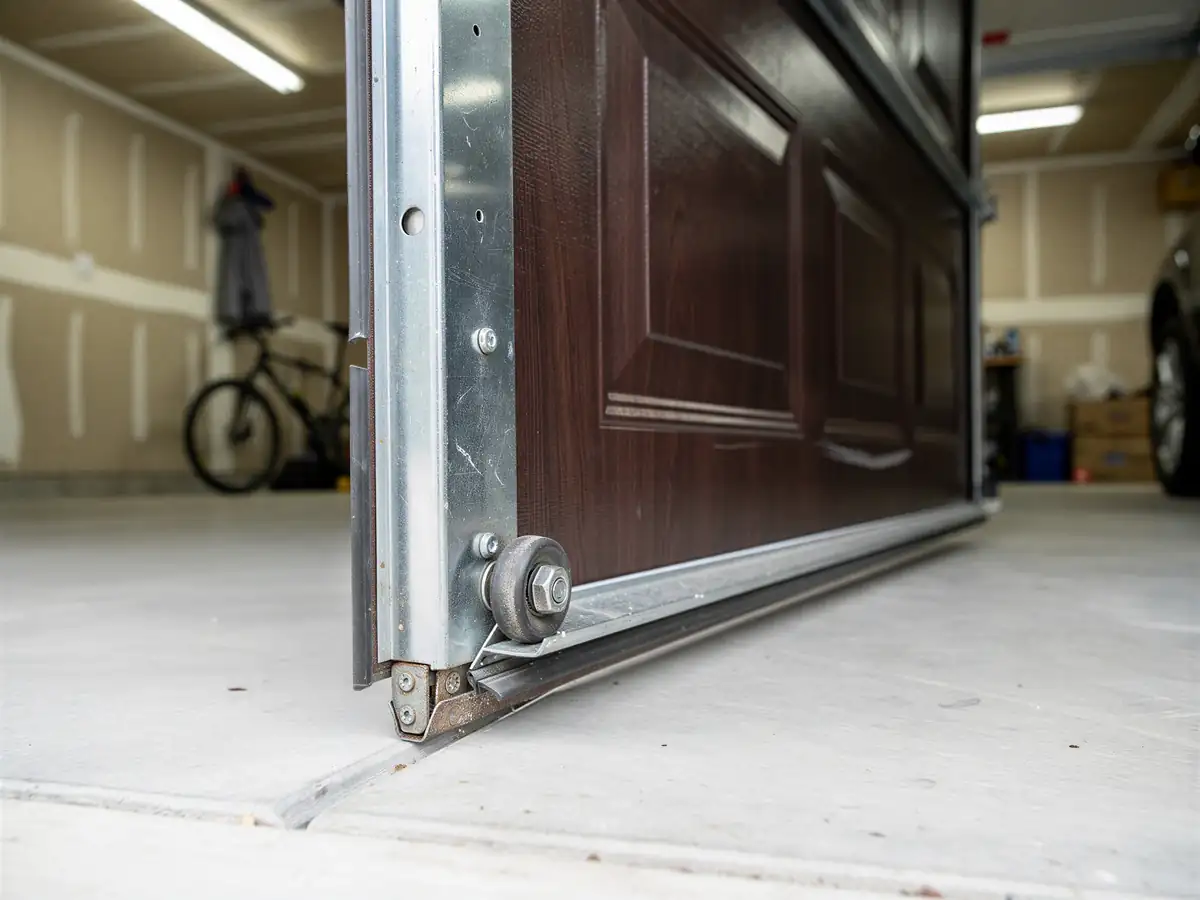
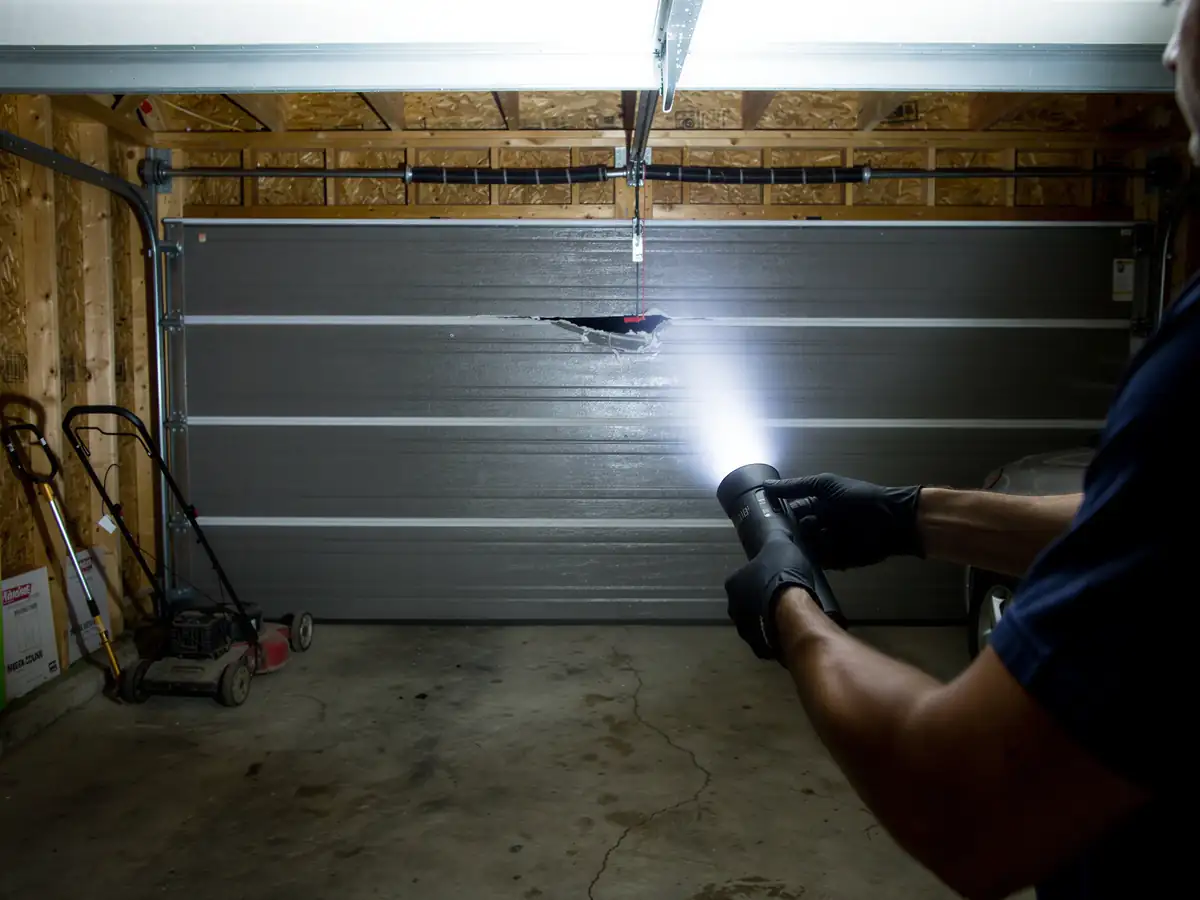
Before you call, you can rule a few things out yourself. Pull the manual release cord and see if the door moves smoothly by hand - if it's heavy or uneven, that's a spring problem, not an opener problem, and no amount of opener troubleshooting will fix it. Look at the tracks for dents or gaps where the rollers have jumped out. Listen for a dragging sound, which usually means a roller has seized.
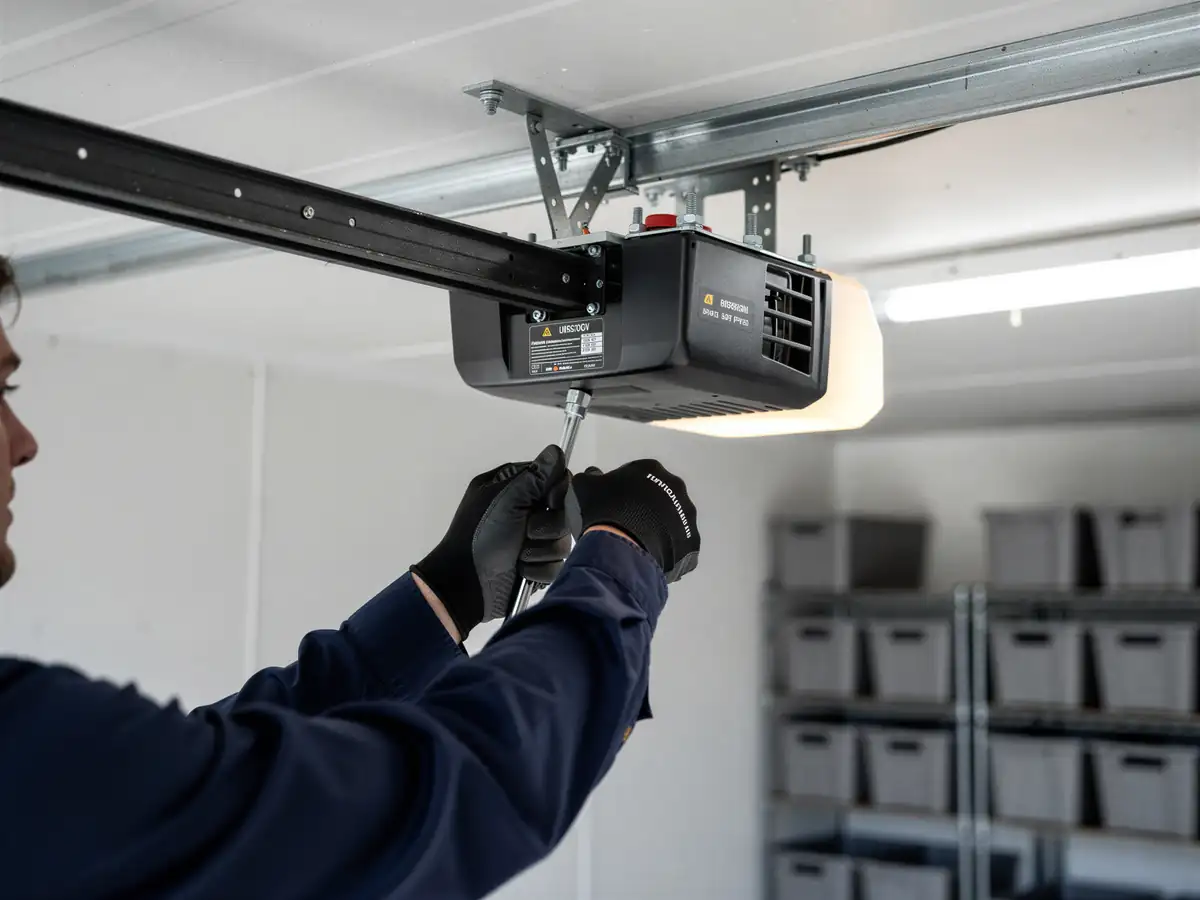
If your house is on the older end of the stock here - a lot of the housing in the four established areas around town dates to the 1960s and 70s - check whether the opener is original. An opener from that era likely doesn't have modern safety reversal, and parts for it stopped being made a long time ago. That's worth knowing before you spend money chasing a repair on something that can't really be repaired.
What you shouldn't do: touch the spring itself, loosen the bolts on the center bracket, or try to adjust the tension bar. That's the one place where a self-check needs to stop and a call needs to start.
The Situation
The service area runs a mix of ages. The bulk of it went up in that 1975-1992 window, with a handful of older pockets - four named areas - still carrying 1960s and 70s doors and hardware. That split matters more than people expect. A door from the newer stretch usually just needs a spring, a cable, or a roller set. A door from the older pockets sometimes needs hardware nobody local keeps in stock, because the track width or the drum size isn't what current doors use.
With 3,056 households and 1,179 owner-occupied houses across the area, and a median household income around $55,125, most calls we get are repair calls, not replacement calls. People want the door fixed, not swapped out, and most of the time that's the right call - a spring and a service visit costs a fraction of a new door.
Where it isn't the right call: if the door itself is warped, if the panels are rusted through, or if you're replacing the same part for the third time in two years. At that point you're paying for a new door in installments, just slower.
How Local Conditions Play In
Statesboro sits in a mild climate with occasional freezes
Not the extreme heat-cycling or deep winter cold that wears out seals and panels fast. That's good news for the door itself - steel doesn't warp here the way it does somewhere with real summer swings. But a hard overnight freeze still thickens the grease in an older opener's gearbox, and we do see openers strain or stall on the first cold morning of the year, especially on doors that haven't been lubricated in a while.
If you're out past Brooklet or up toward Portal
Both inside the normal service radius - the call itself doesn't change. Distance isn't what drives the bill; the parts and the job do. Farther out, toward Metter or Newington, is still something we cover, but it's worth mentioning when you call so the visit gets scheduled right.
One limit worth being honest about
We don't keep every obsolete torsion spring size or drum on the truck, particularly for the older 1960s and 70s hardware still in a few neighborhoods. Sometimes that means a part gets ordered and the job finishes on a second visit instead of one.