What's Worth Fixing on an Older Statesboro Garage Door
In Statesboro, homes built from 1975 to 1992 often still run original garage door hardware today. Here's how to tell what's worth repairing and what isn't.
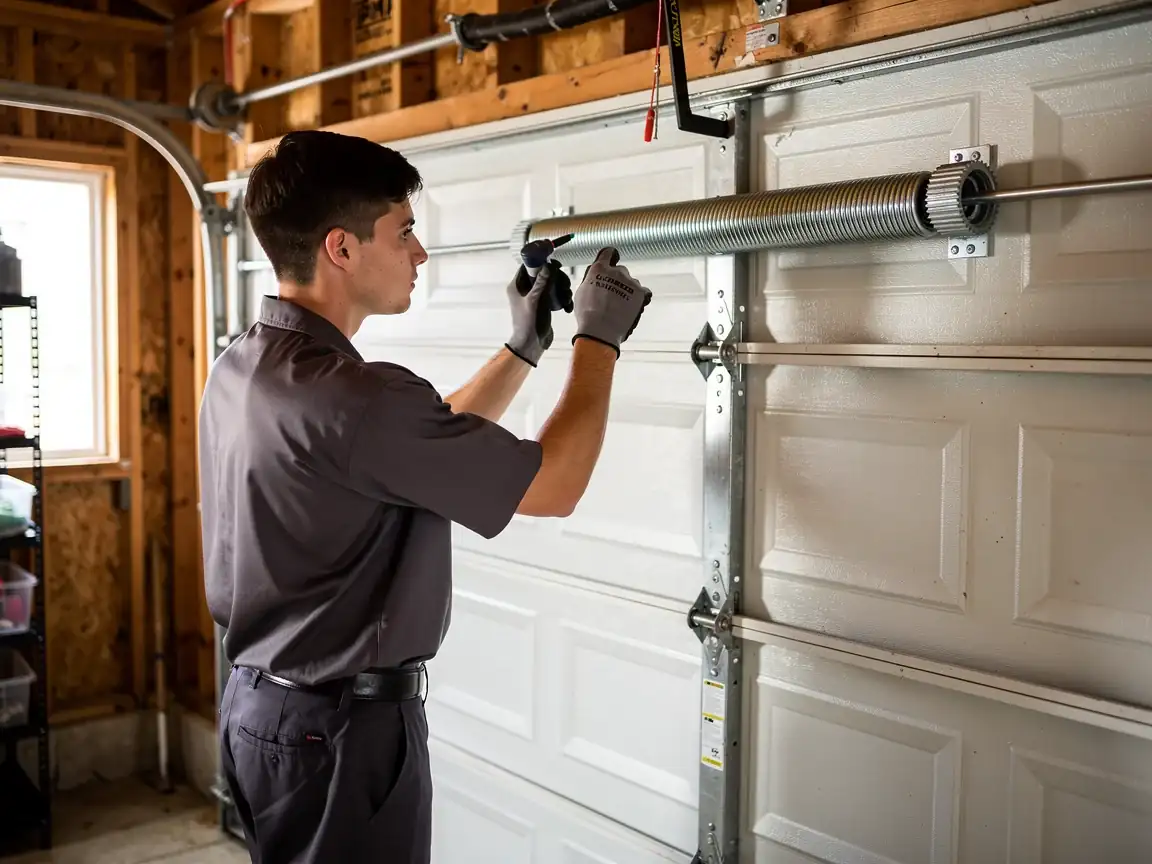
A lot of what's on the road here went up between 1975 and 1992, with the median landing around 1978. That means plenty of garage doors are running the torsion hardware that came with the house 30 to 50 years ago - original springs, original track brackets, sometimes the original opener. If the spring snaps, don't try to re-tension it yourself; torsion springs under load have put people in the hospital. If the opener grinds, hesitates, or reverses for no reason, that's usually a gear or capacitor near the end of its life, not something to keep forcing. Call sooner rather than later if a cable has started to fray near the bottom bracket - on a door this old, the drum underneath it has usually worn to match, and one part failing tends to take the other with it. Here's the honest part: once a torsion spring from that era has rusted into the shaft, we sometimes find it's cheaper to replace the whole operator system than to keep chasing parts for a spring size nobody stocks for a door that age. That's not a sales pitch, it's just the math.
Checking It Yourself
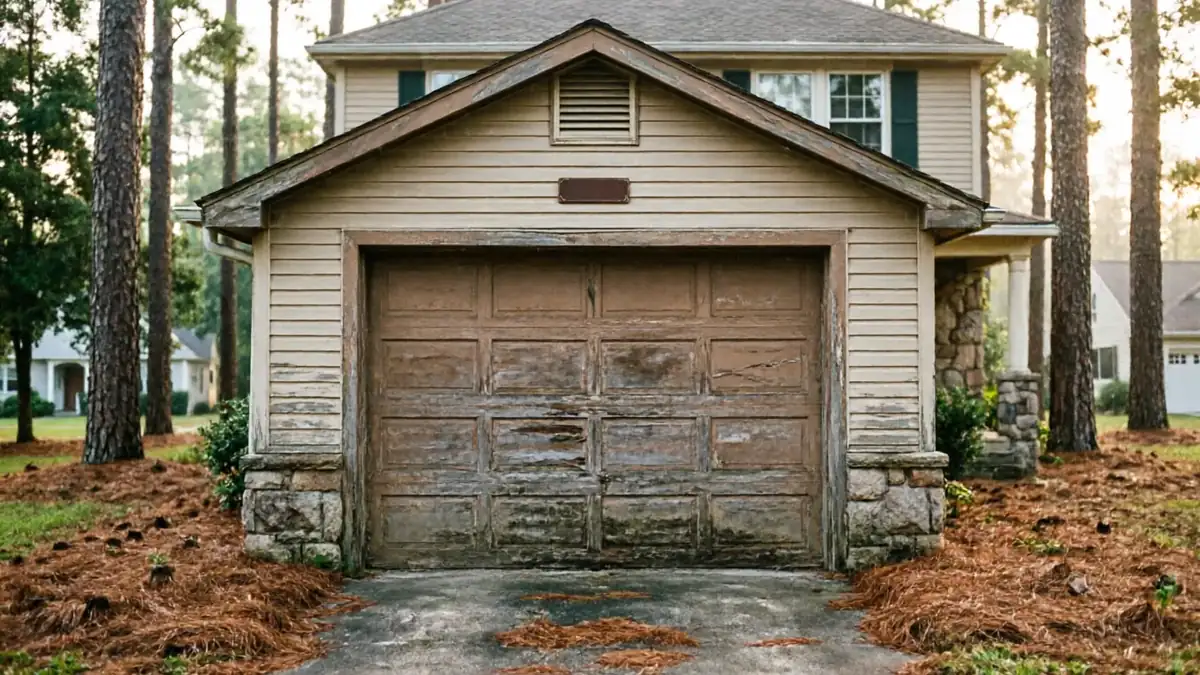
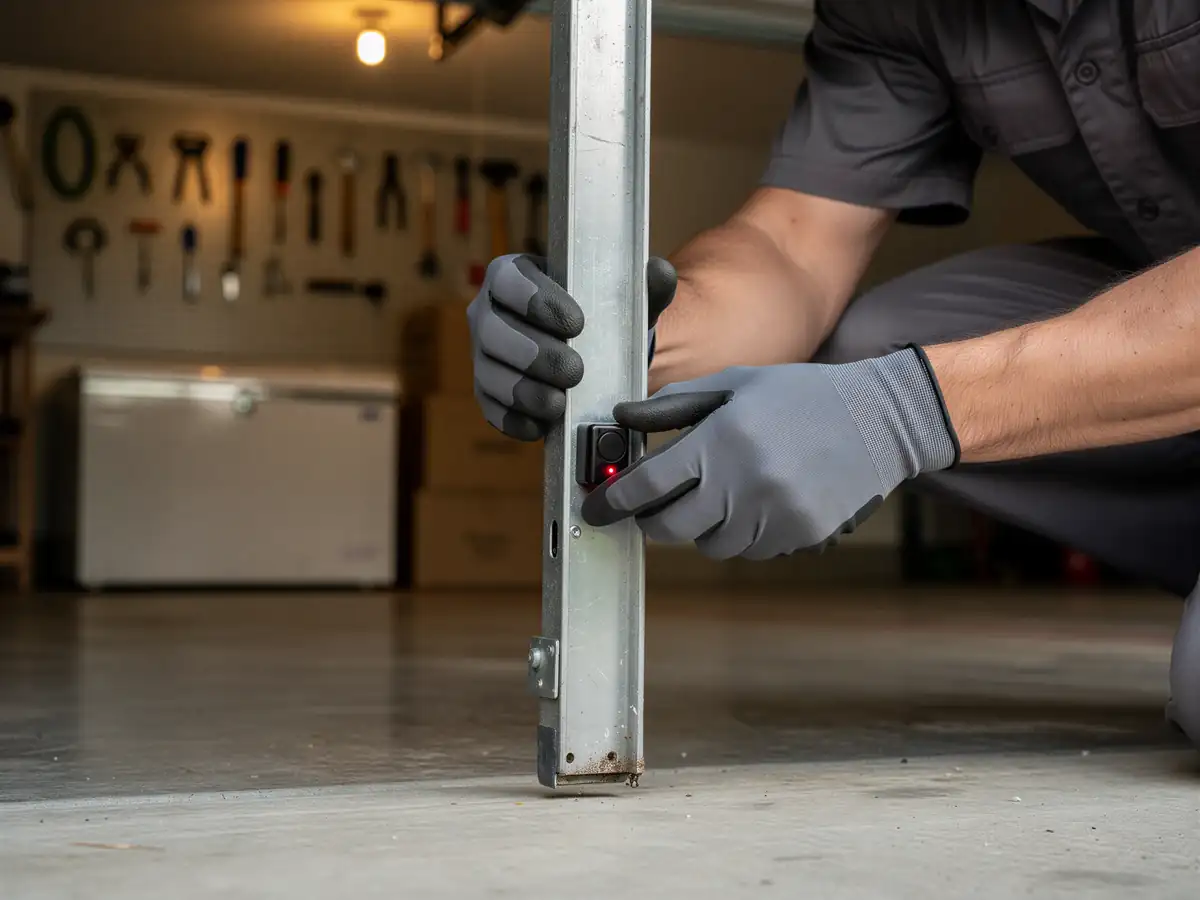
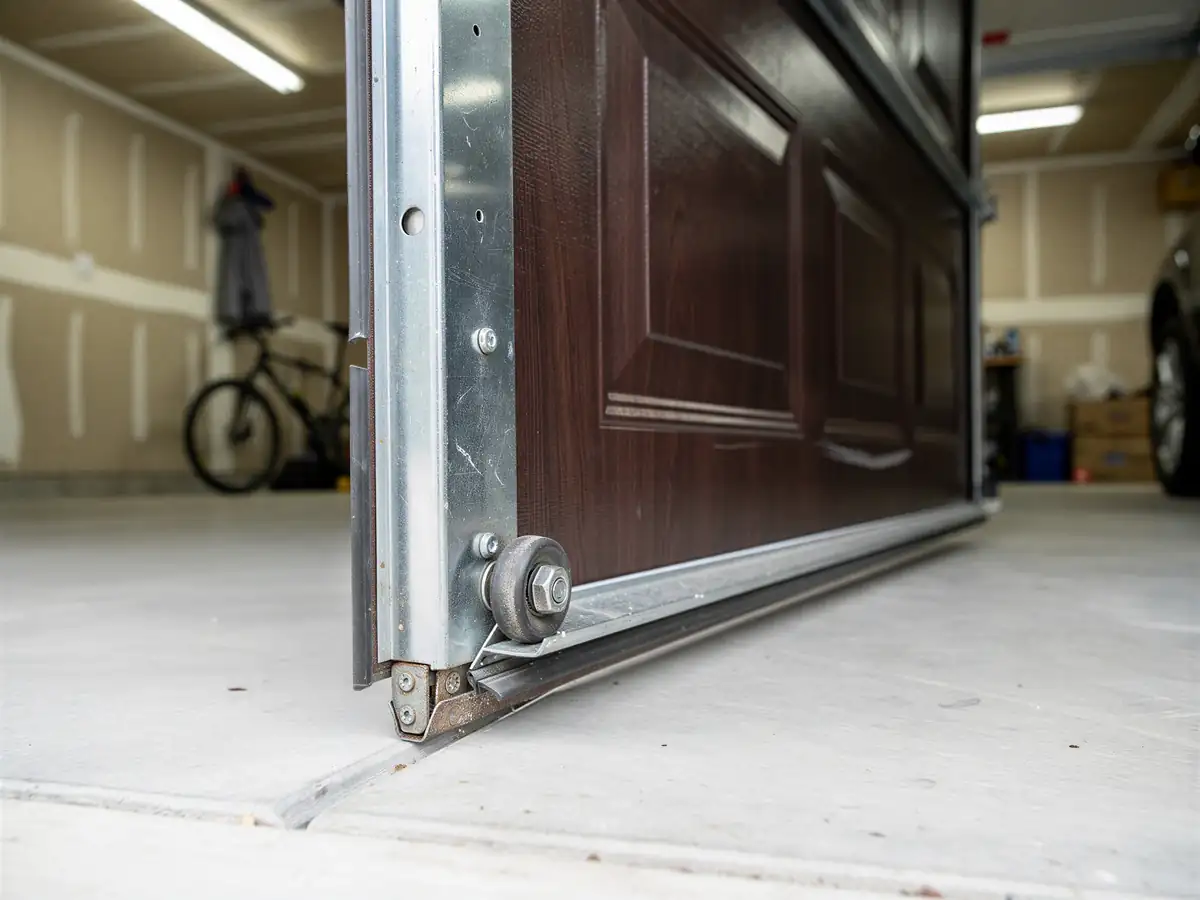
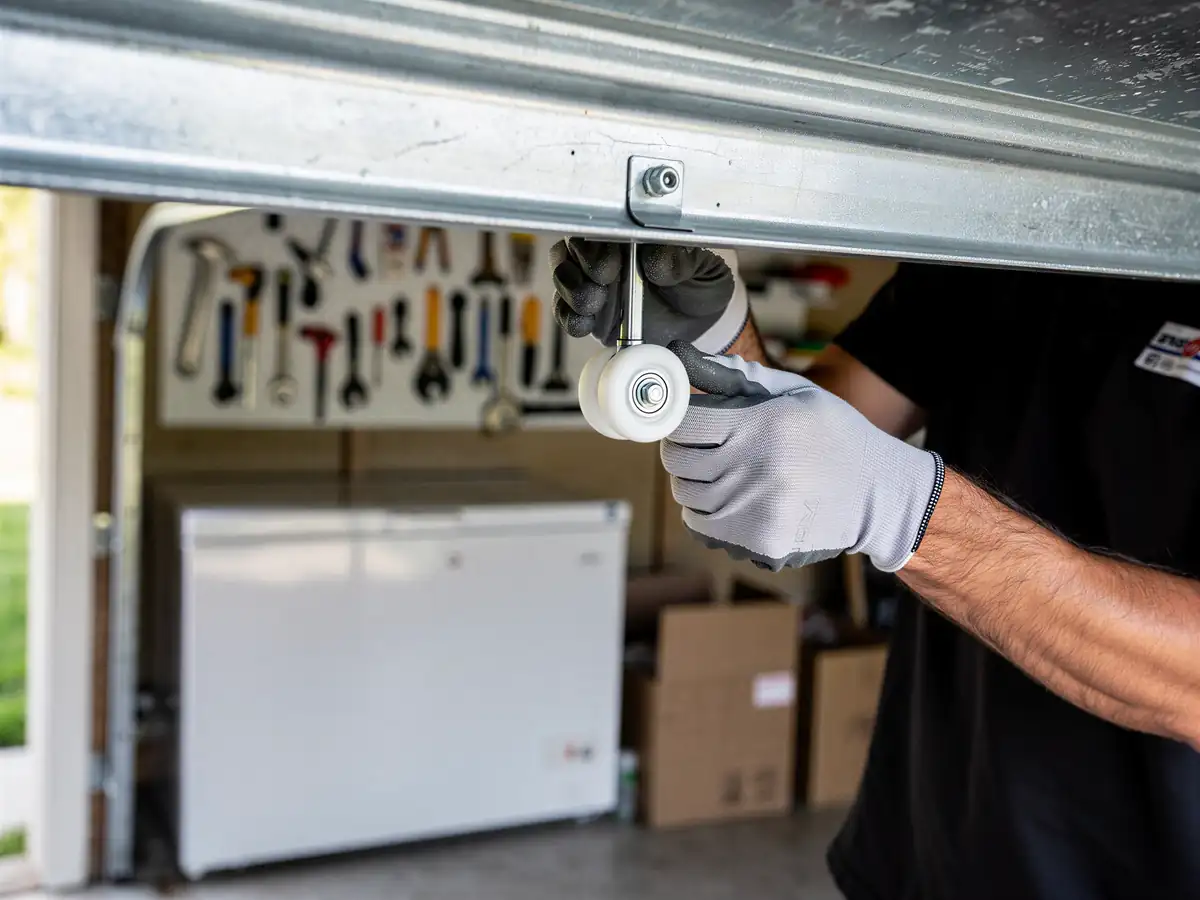
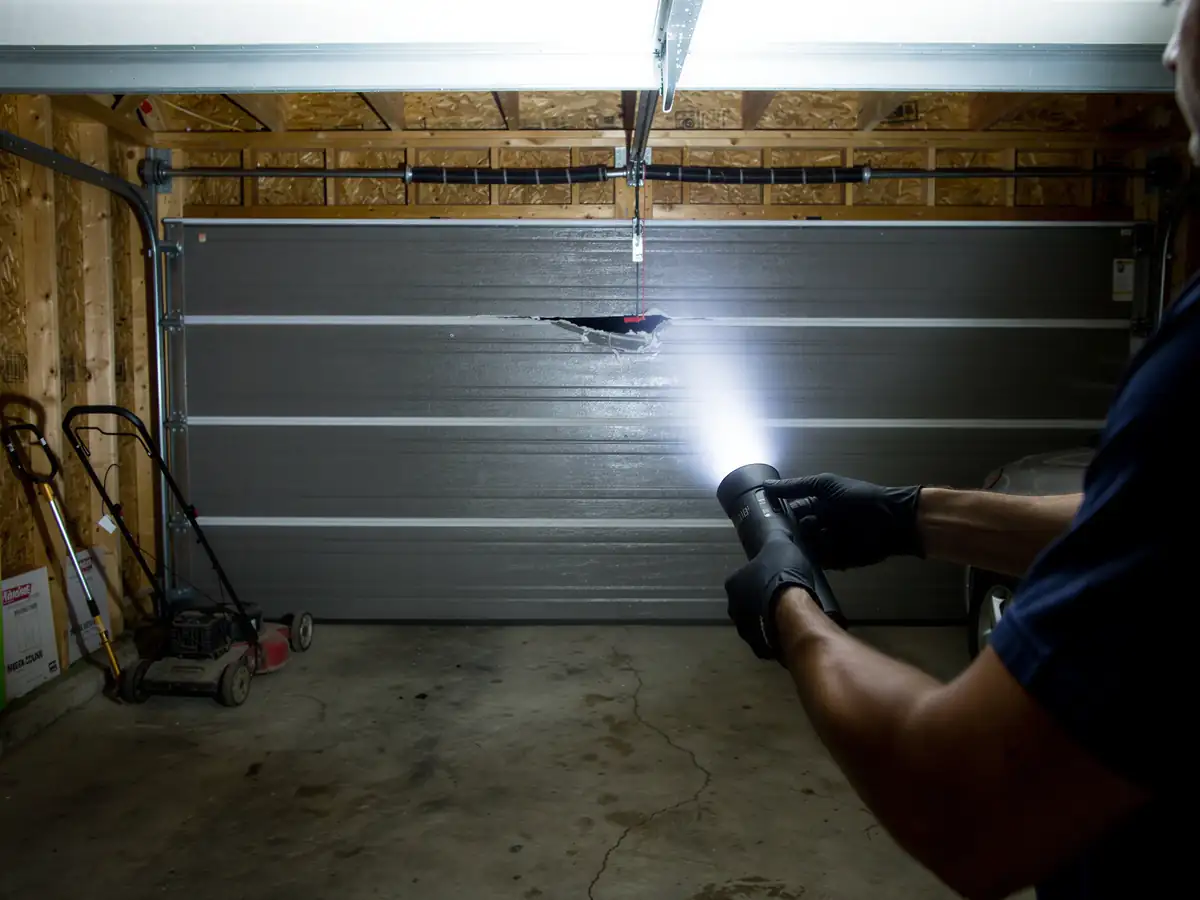
Before you call anyone, a few things you can look at yourself. Pop the garage light on and check the spring above the door - if it's one long spring stretching side to side, that's extension spring setup, common on houses from the older end of the 1975-1992 run. If it's a shorter spring mounted horizontally above the header, that's torsion, more common on the later builds. Either way, look for gaps in the coils or rust streaking down the wall behind it - that tells you moisture's been sitting on it. Run a hand along the track for flat spots or bends; steel track from this era dents more than the aluminum stuff sold now. Check the bottom panel for rust blooms starting at the corners, especially where grass clippings or mulch sit against it. If the door shudders instead of rising smoothly, that's often a roller going bad, not the opener. None of this requires tools, just a flashlight and five minutes before you decide whether it's a $40 part or a bigger job.
The Situation
Across the service area, the housing stock splits into two eras that matter for door age. Most of it dates 1975 to 1992, median around 1978, which means original torsion setups are now well past the point manufacturers expected them to last. Four of the older pockets nearby carry 1960s and '70s stock, older still, often with the single-panel wood doors or early steel doors that predate common torsion conversion. With 1,179 owner-occupied houses spread across 3,056 households total in the area, a sizeable share of these are the kind of long-owned homes where the garage door has never been touched since move-in. At a median household income of $55,125, replacing a working door outright isn't always the first move households here make, and it shouldn't have to be - a lot of these doors have another decade in them with the right spring, cable, or roller swapped out. The split matters because a door from the 1960s stock and a door from the 1988 end of the newer run need different parts, different spring wind direction sometimes, and in a few cases hardware that's harder to source than a newer door would need.
How Local Conditions Play In
The climate band here is mild with only occasional freezes, which is easier on garage door hardware than a true four-season climate would be - you're not dealing with the hard freeze-thaw cycling that cracks seals and seizes springs every winter. But occasional freeze still means occasional freeze: on the mornings it drops below freezing, a torsion spring with 30-plus years of surface rust can bind tighter than it would on a mild day, and that's often when an older spring finally lets go. Humidity does more damage here over time than cold does - it's the slow rust on steel track and bottom brackets that adds up over decades, not sudden cracking. The service area runs out to Brooklet about seven miles off, Portal around eleven, Metter at seventeen, and Newington at nineteen - enough spread that conditions don't vary much house to house, so what's true for a door's hardware in town holds about the same a short drive out. None of that changes the repair math much; it just means rust and binding, not frozen seals, is usually the thing to check first.
How it works
From “it’s stuck” to “it’s fixed”
01
Tell us what’s wrong
Describe the symptom - won’t open, loud bang, opener runs but the door won’t move.
02
On-site diagnosis
A technician tests the door under power and by hand and finds what actually failed.
03
Clear, up-front plan
You get the fix that’s needed and what drives the cost - before any work starts.
04
Repaired & tested
The repair is done, the door is set true and tested, and the work area left clean.
Not sure which repair your door needs in Statesboro, GA? Describe what it’s doing - every job starts with a diagnosis.
My garage door is original to the house - is it too old to fix?
Not necessarily. If the house was built in the 1975-1992 window common around here, a 30-to-50-year-old door can still take a new spring, cable, or roller and keep running. What usually ends the repair-versus-replace question is rust that's eaten into the track or panel structurally, not just the surface - that's a different call than a worn spring.
Why did my spring break on a cold morning?
This area doesn't see hard freezes often, but when the temperature does drop, a spring that's already surface-rusted from years of humidity can bind and snap under load it would normally handle fine. It's less about the cold itself and more about rust that's been building for years finally meeting a stiffer morning.
Should I replace the opener or just fix it?
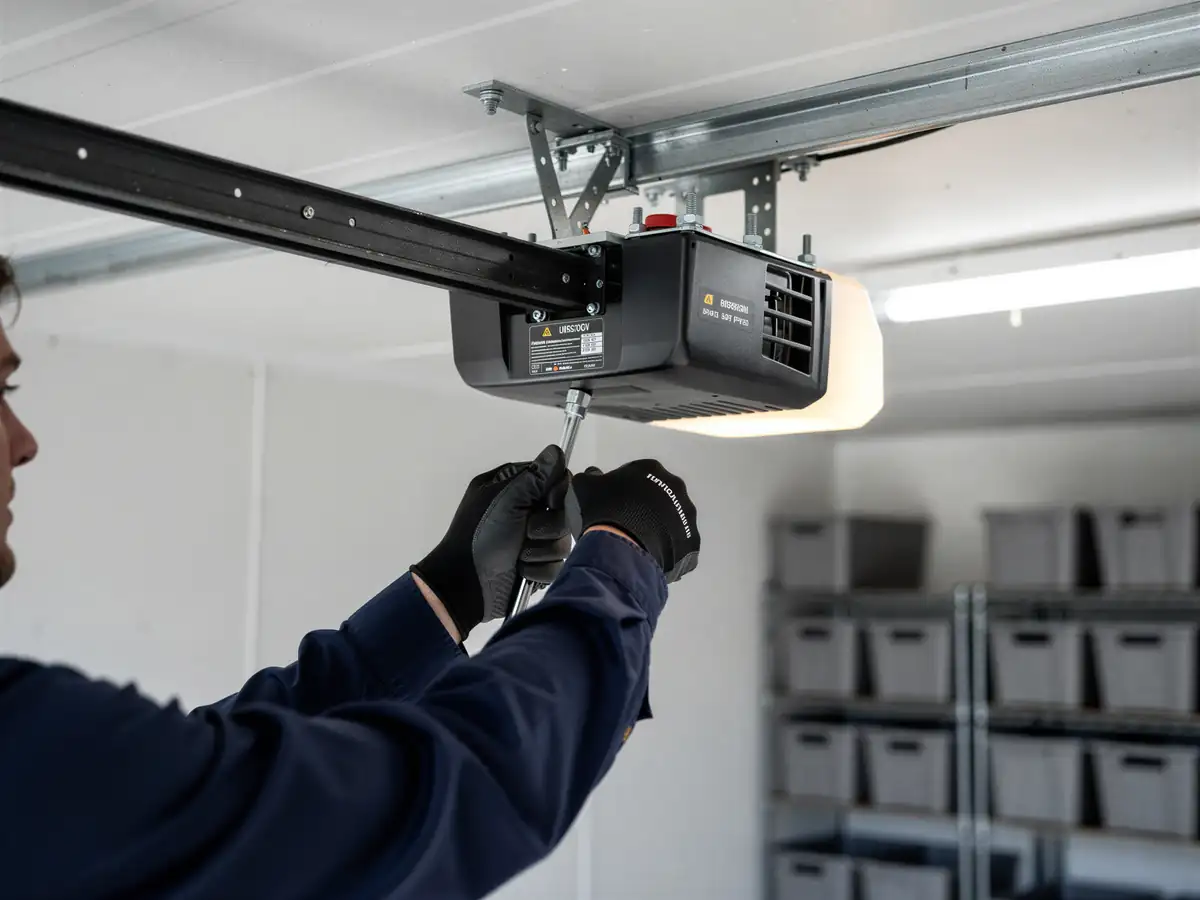
Depends what's failing. A worn gear or a bad capacitor is a repair. If the opener is original to a house from the older end of the 1975-1992 build range, we sometimes find the motor and circuit board are both near the end of their service life, and patching one just means the other fails next. We'll tell you straight which situation you're in.
Ready to get your garage door sorted?
Tell us what it’s doing and where you are in Statesboro - we’ll take it from there.