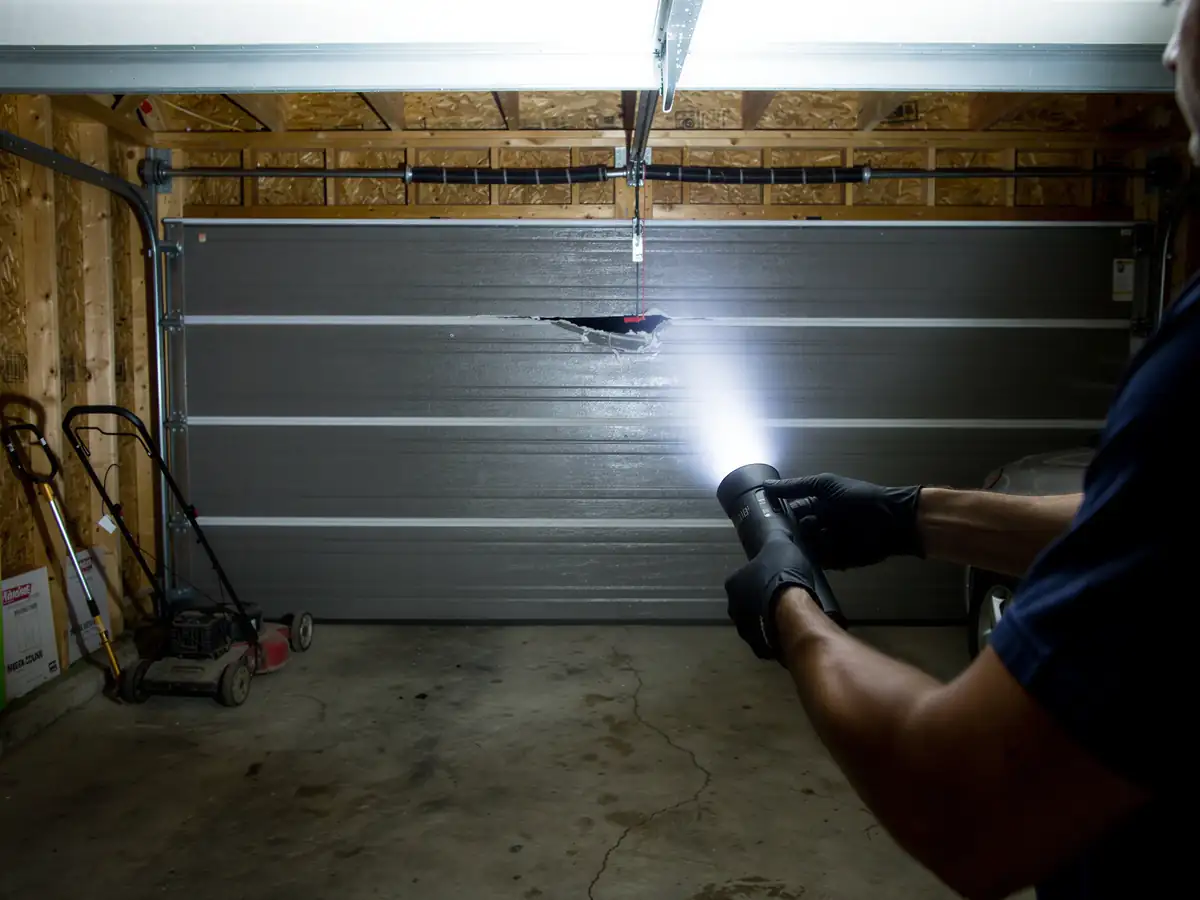
What You Are Seeing
A grinding or popping sound when the door moves, a door that rocks side to side in the track
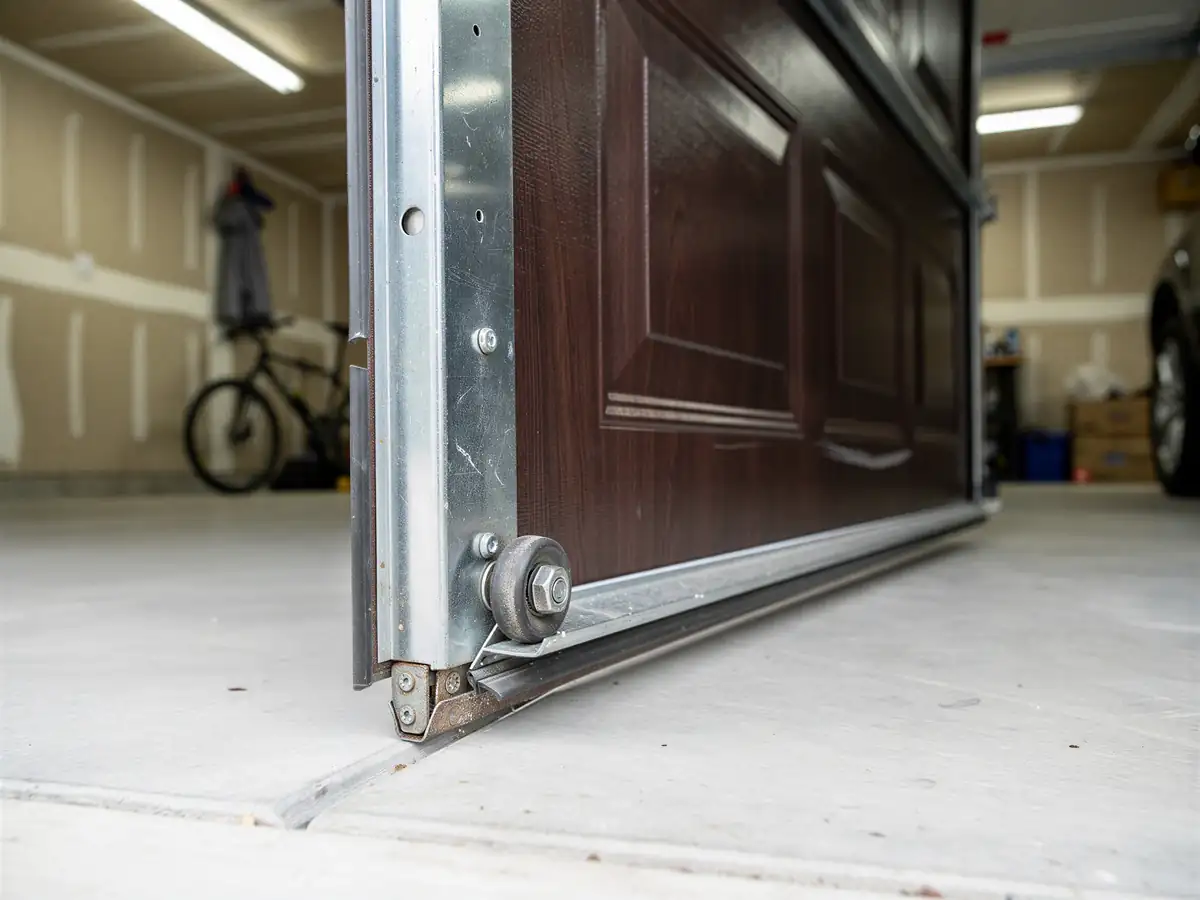
Or a panel that hangs slightly off-line at one corner - that's roller wear, not a spring or opener problem. Nylon rollers crack at the stem after years of flexing; steel rollers with bearings go dry and start chewing up the track edges instead of rolling through them. You'll often see small plastic shavings or a fine metal dust sitting in the bottom track if you look close.
Most houses across this service area went up between 1975 and 1992
With the median build year around 1978. Doors from that era, and the retrofit units that replaced them in the 1990s and 2000s, use roller styles and track widths that don't always match what's sold off the shelf today - which is why a mismatched roller can bind a track even when it looks like the right size.
If only one roller is bad, you can sometimes get away with replacing that one
More often, if one has failed from age, the rest on that door are close behind it, and doing them as a set saves a second call.
How Long It Takes
A full roller set on a standard double door, done on-site, usually runs under an hour once the tech is on the property - rollers aren't a tear-down job like a spring conversion. Single doors go faster. The time that varies is diagnosis: figuring out whether the rollers are the actual cause or whether a bent track or a weak spring is forcing them to carry load they weren't built for.
We don't stock every roller size on the truck for every door built since the 1970s, so if your track uses an older or oddball stem length, there can be a short wait on the part. That's the honest limitation here - it doesn't happen often, but it happens.
What Causes It Around Here
This area sits in a mild climate band with occasional freeze, which doesn't sound like much compared to a true winter, but it matters for rollers specifically. Nylon rollers get brittle with repeated temperature swings - not a hard freeze that cracks them outright, but the cycle of a cold night followed by a warm afternoon, over and over, season after season. Steel rollers lose their factory grease the same way, just slower.
Across the four named areas of older stock in this service area, dating mostly to the 1960s and 70s with the broader build-out running through 1992, garages were framed for doors and track systems from that period. A lot of those original setups have had openers added or doors swapped without anyone updating the track or hardware to match. That mismatch is what shortens roller life here more than age alone would.
What the Repair Takes
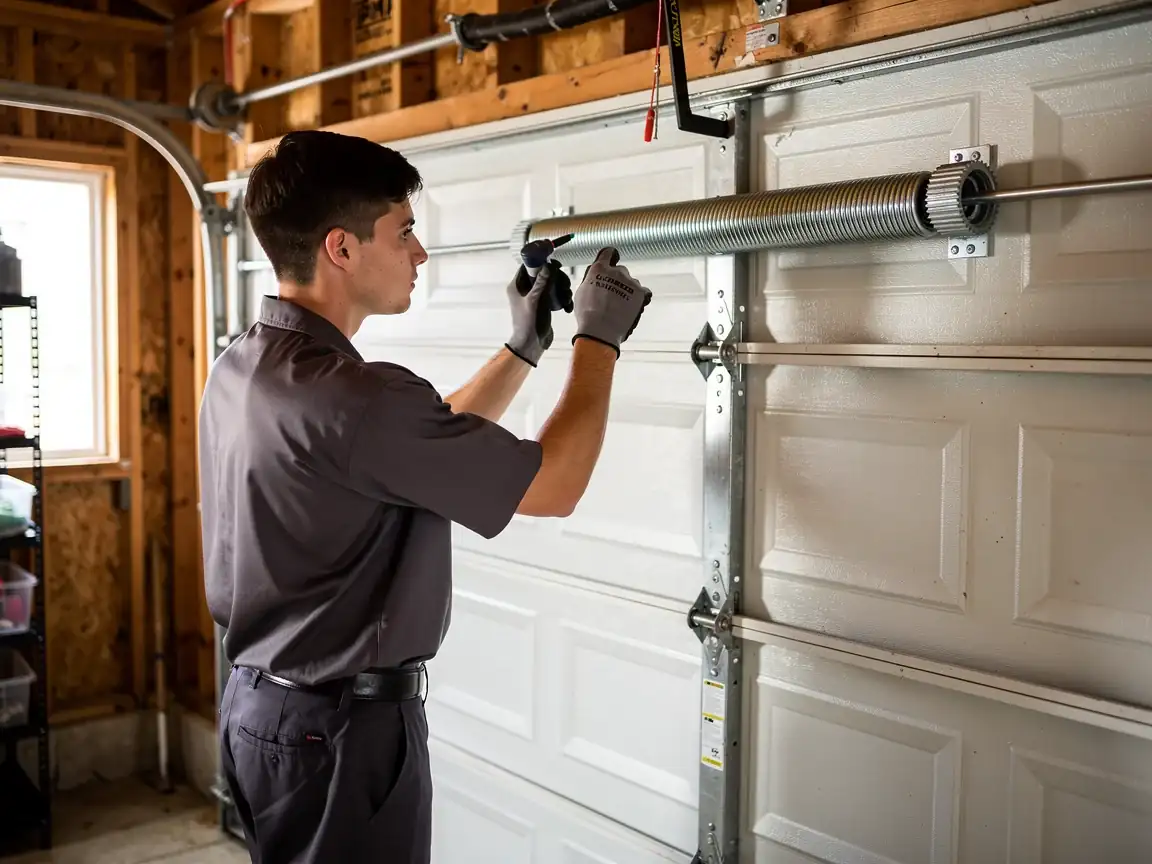
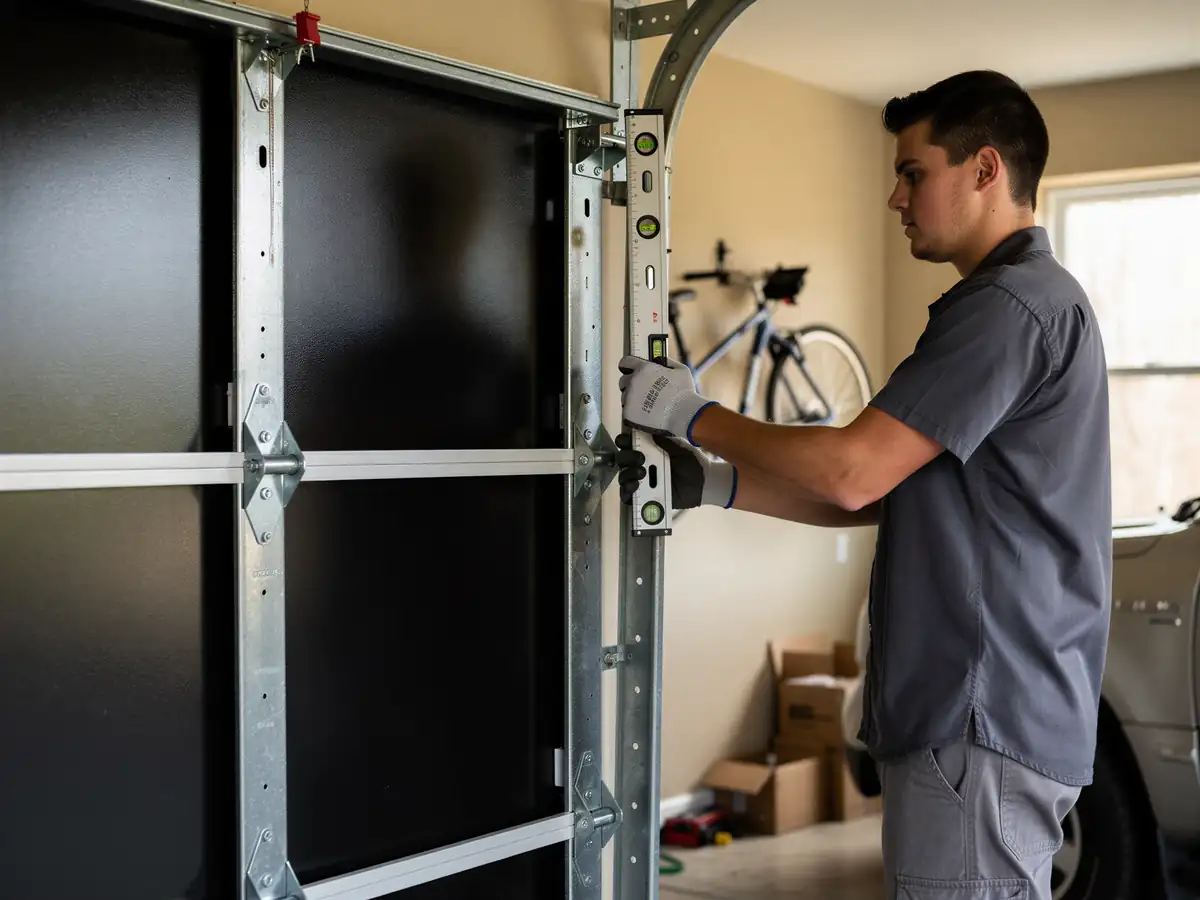
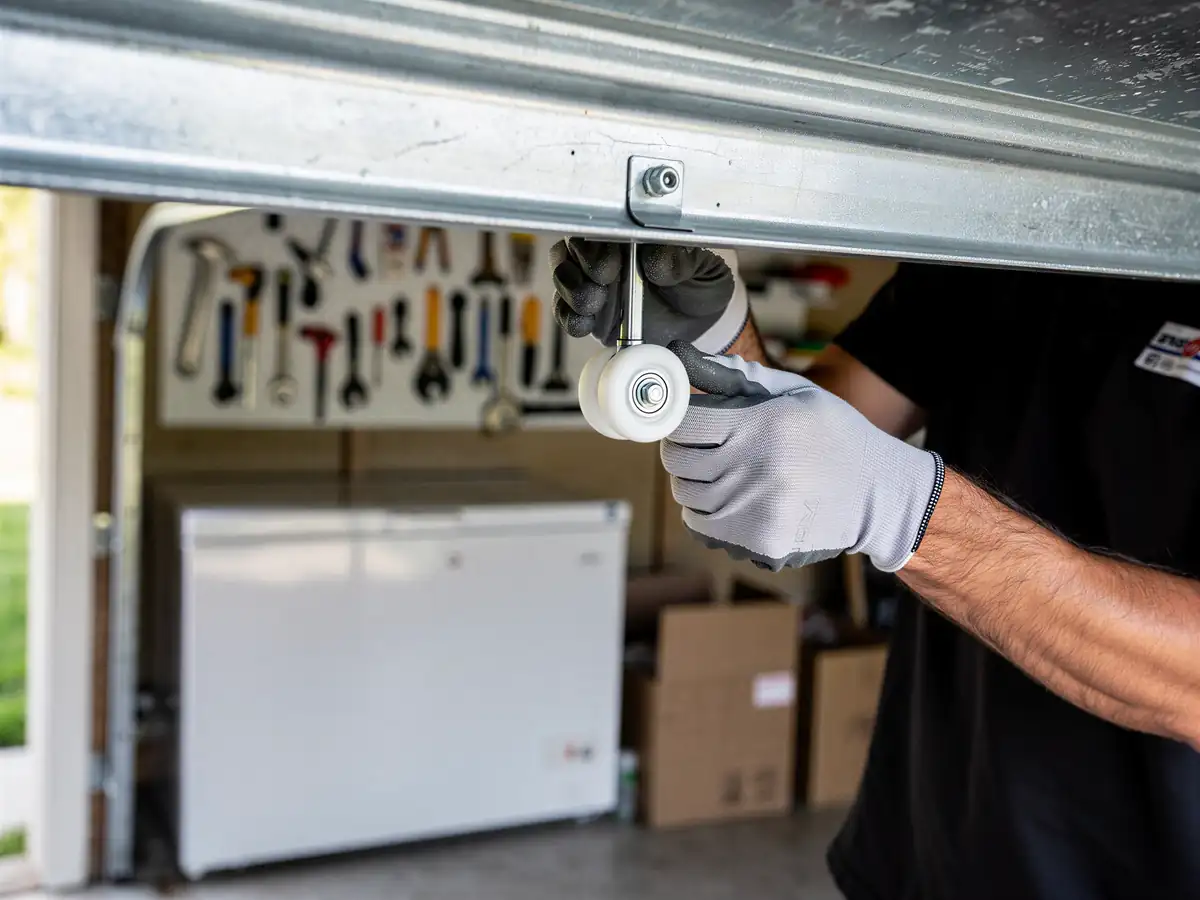
Replacing rollers means lifting the door off its cables temporarily, popping the old roller out of its hinge
And setting the new one in - done one hinge at a time so the door never comes fully off the track. On a double door that's eight to ten rollers depending on panel count; a single door usually has six to eight.
We check the track alignment at the same time
Since a roller replaced into a bent or splayed track will fail again inside a year regardless of quality. If the track's the real problem, we'll say so rather than sell rollers that won't hold. With median household income in this service area at $55,125 and most homes owner-occupied, most folks here are weighing a $40 roller fix against letting it ride until something louder breaks - we'll give you the honest read on which one makes sense for your door.