What Causes It Around Here
Most of the service area we cover was built in the 1960s and 70s
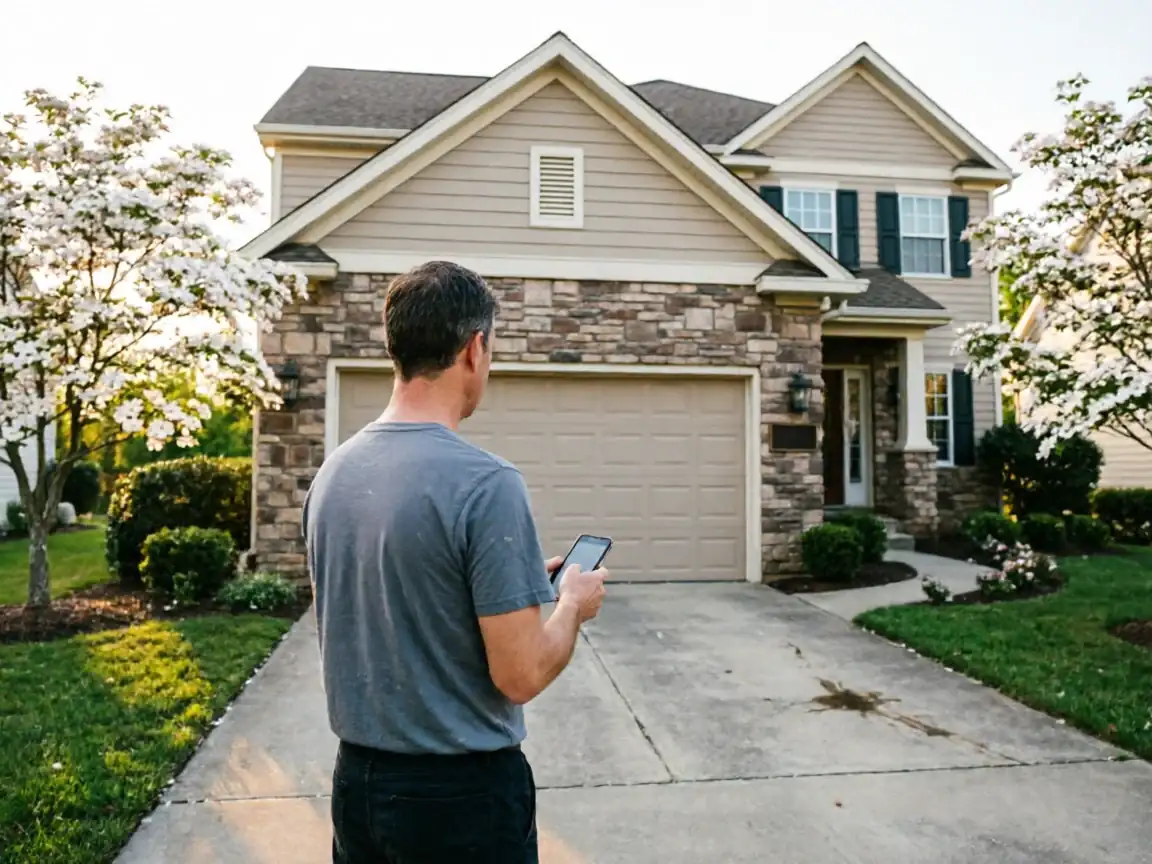
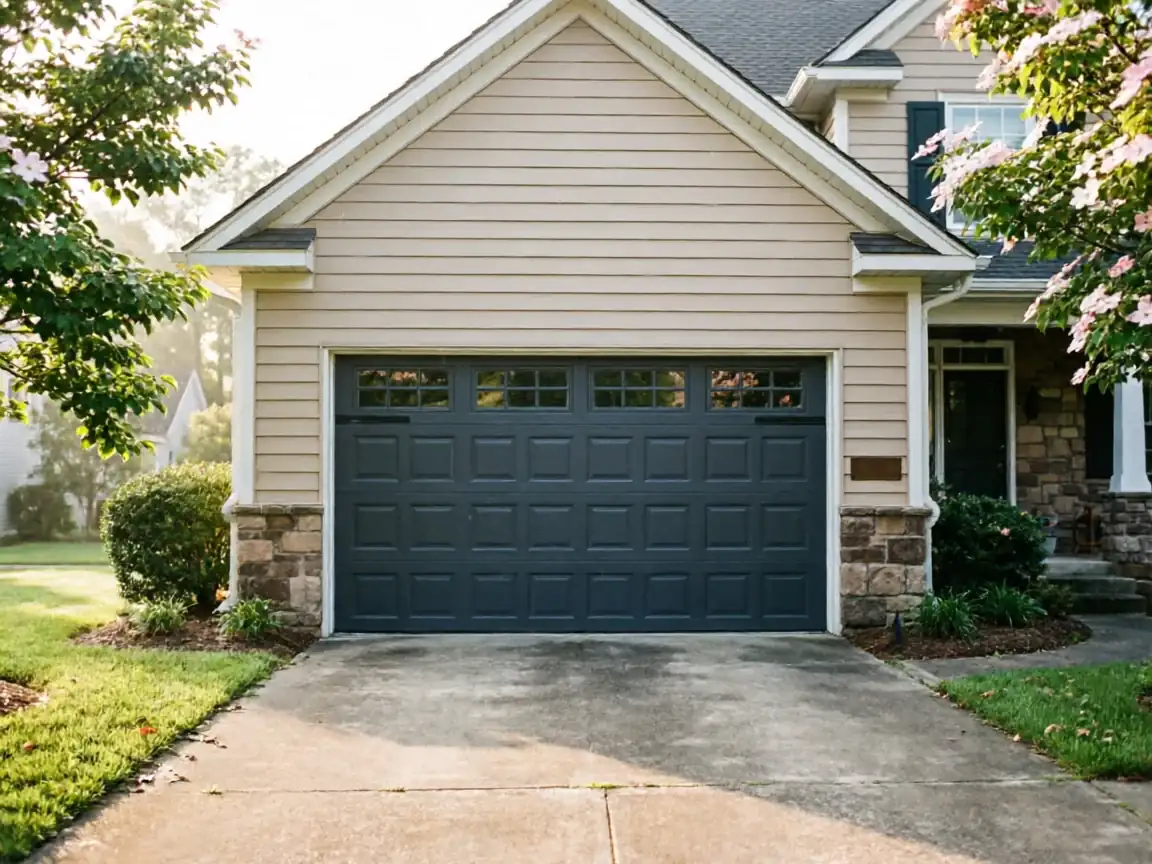
But Brooklet runs later than that - the median house here went up around 1992, more than a decade after the broader area's 1978 median. That gap matters. A door installed in 1992 came with a factory steel sectional panel, a torsion spring sized to a standard shaft, and a chain-drive opener with a circuit board instead of a mechanical relay. Those boards are now past their expected service life, and that's the call we get most from this side of the county: not a bent track, but an opener that clicks and does nothing, or a spring that let go with the same loud bang you'd hear from any era of door once the coil finally fatigues.
The climate here is mild with the occasional freeze
Which isn't hard on steel the way a true winter would be, but it still works on a spring. Three decades of expansion and contraction on a coil that's been doing its job quietly is enough. When it breaks, it breaks all at once, usually when the door is closed and under full tension - which is exactly why you don't want to be the one reaching for it.
How Long It Takes
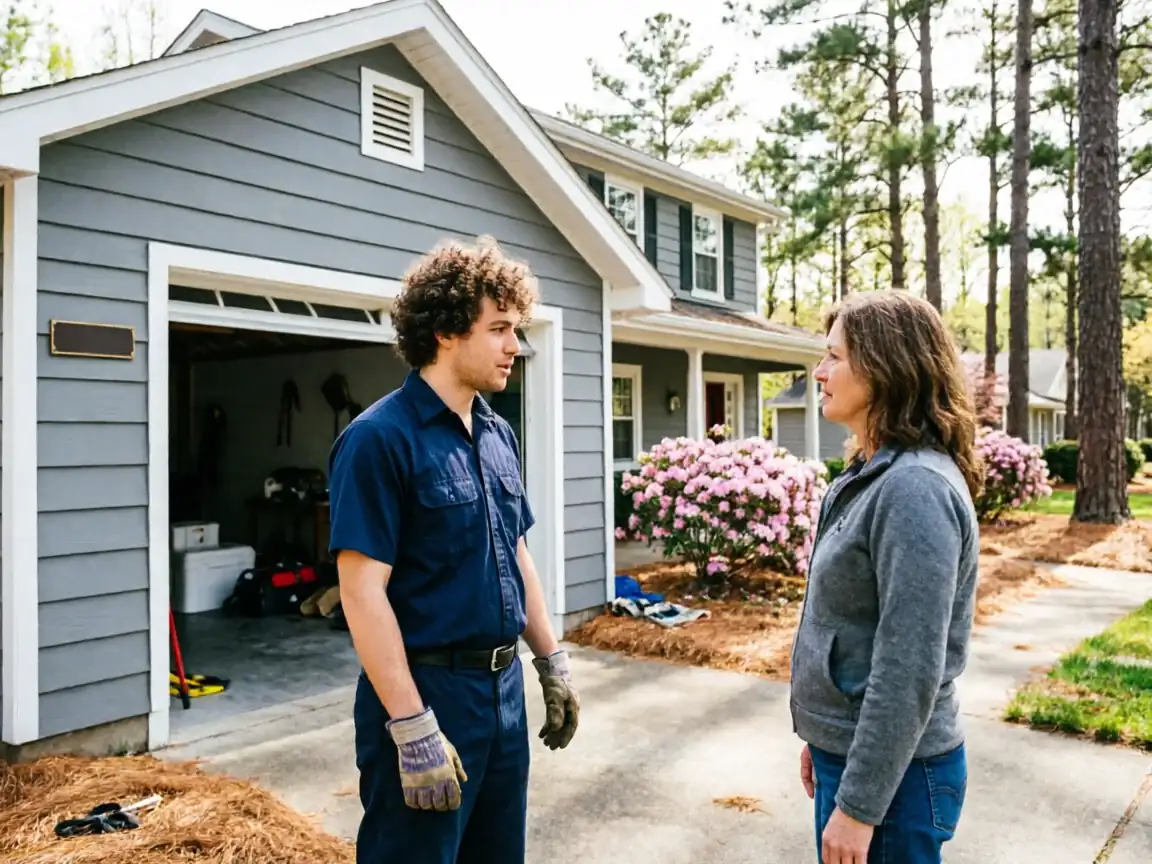
Brooklet is about 7 miles from our shop in Statesboro, so the drive itself isn't the bottleneck - it's what's waiting at the door. Because most Brooklet houses are on the newer end of the stock we see, the torsion springs are usually a standard size, not the odd, discontinued sizing you find on some of the older 1960s houses elsewhere in the area. That means once the truck is on-site, a standard spring swap or cable replacement doesn't turn into a parts hunt.
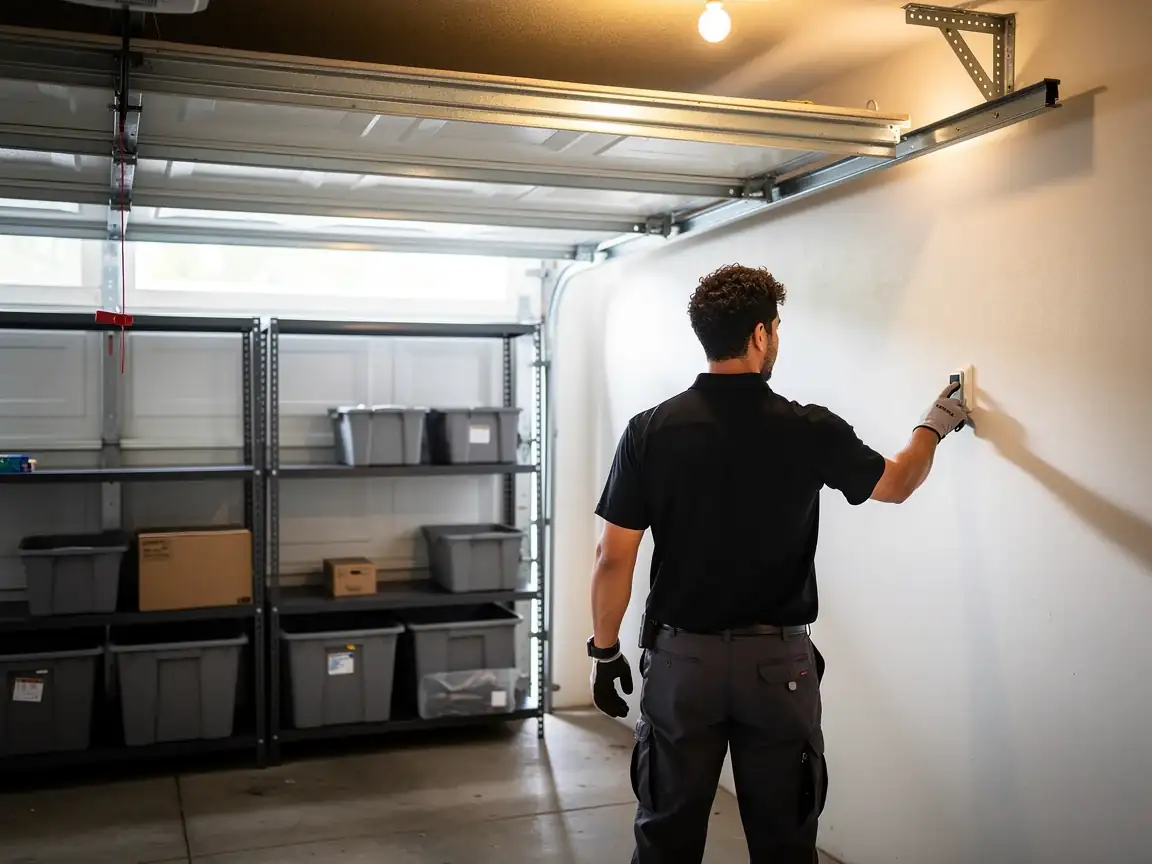
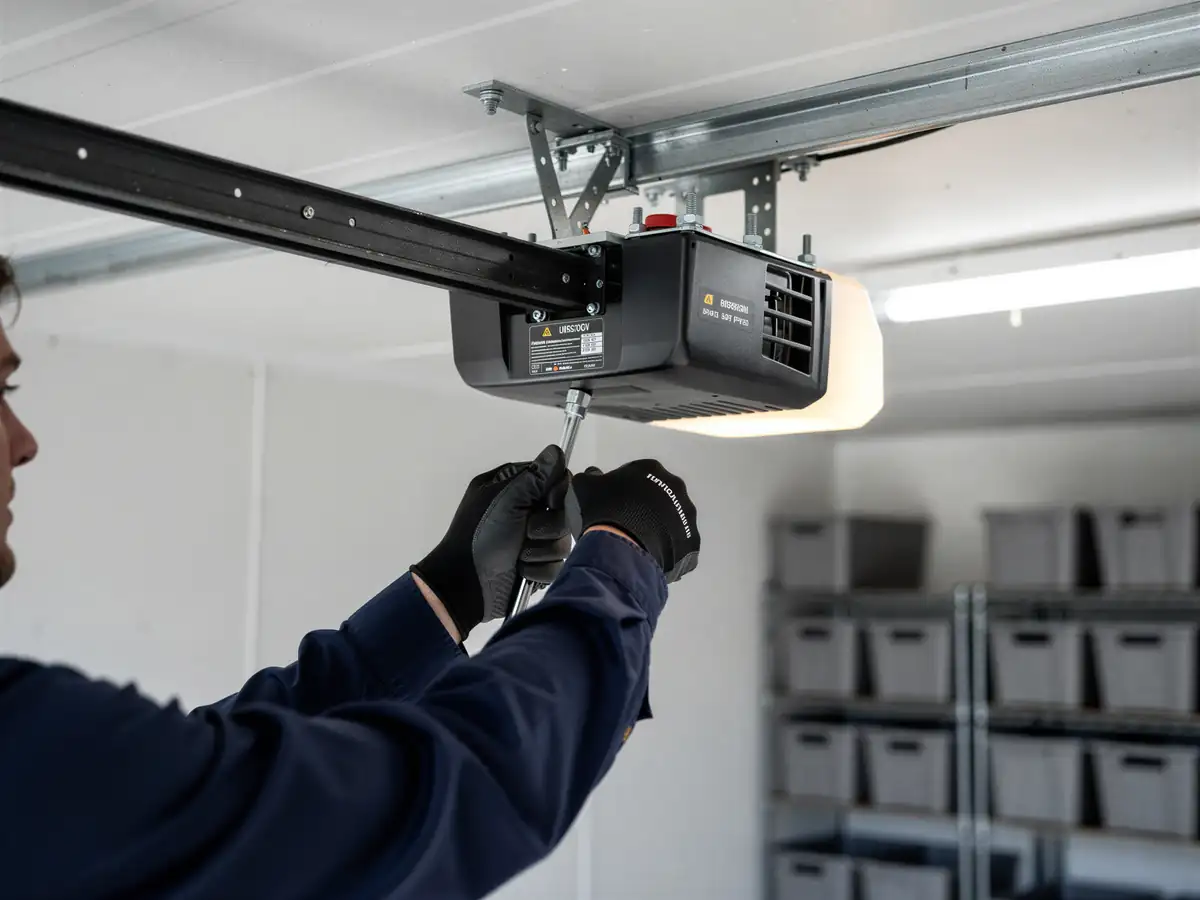
Opener boards are a different story. If the circuit board itself has failed rather than just a sensor or a wire, and the unit is an older chain-drive model, matching the board can take a day or two to source. We'll tell you straight if that's the situation rather than guessing at a same-visit fix.
What Can Go Wrong
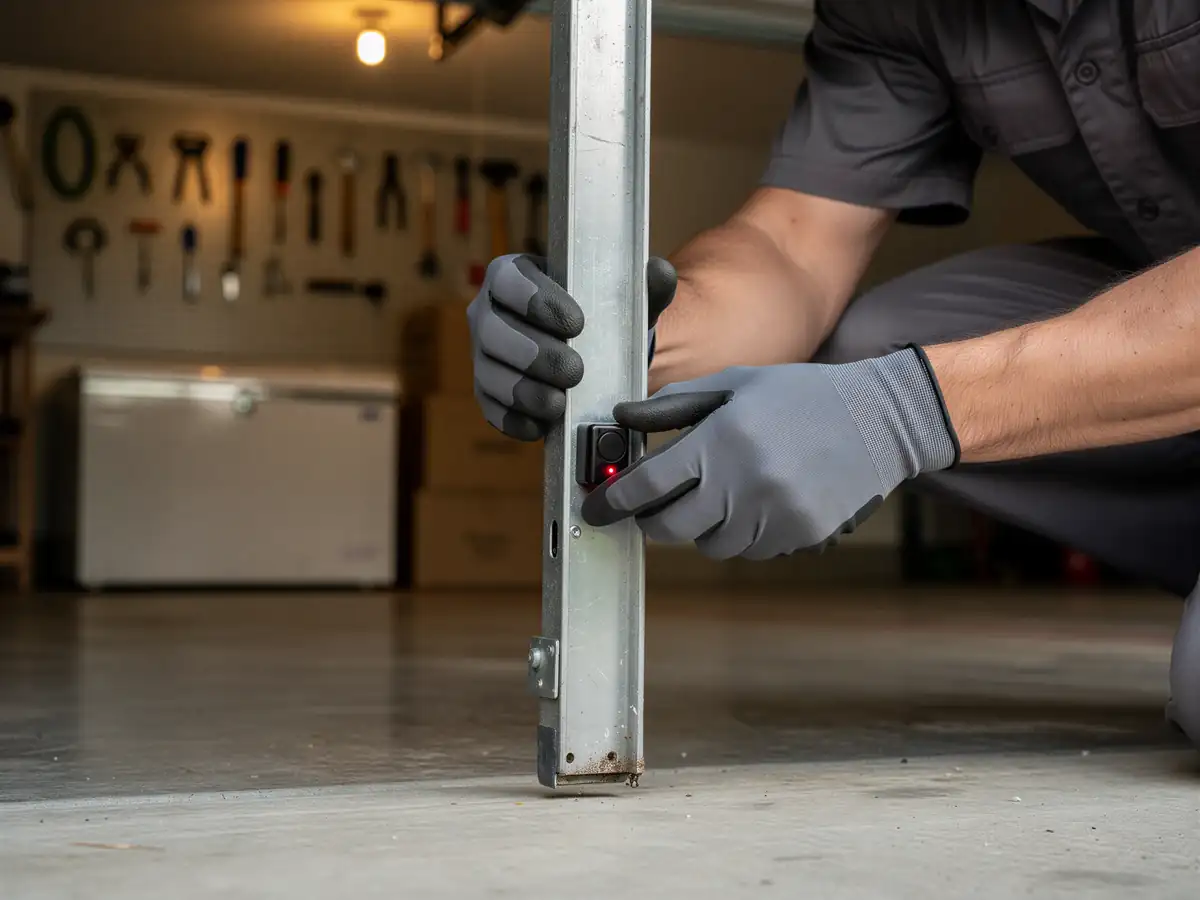
The most common emergency call from this area is a snapped torsion spring - the door either won't budge or drops hard the last foot before you can catch it. Second most common is an opener that runs but the door doesn't move, which usually traces back to a worn drive gear or a logic board that's lost its memory of the travel limits. We also see photo-eye sensors knocked out of alignment, which makes the opener reverse the door or refuse to close at all - an easy fix once you know that's the cause, but confusing if you don't.
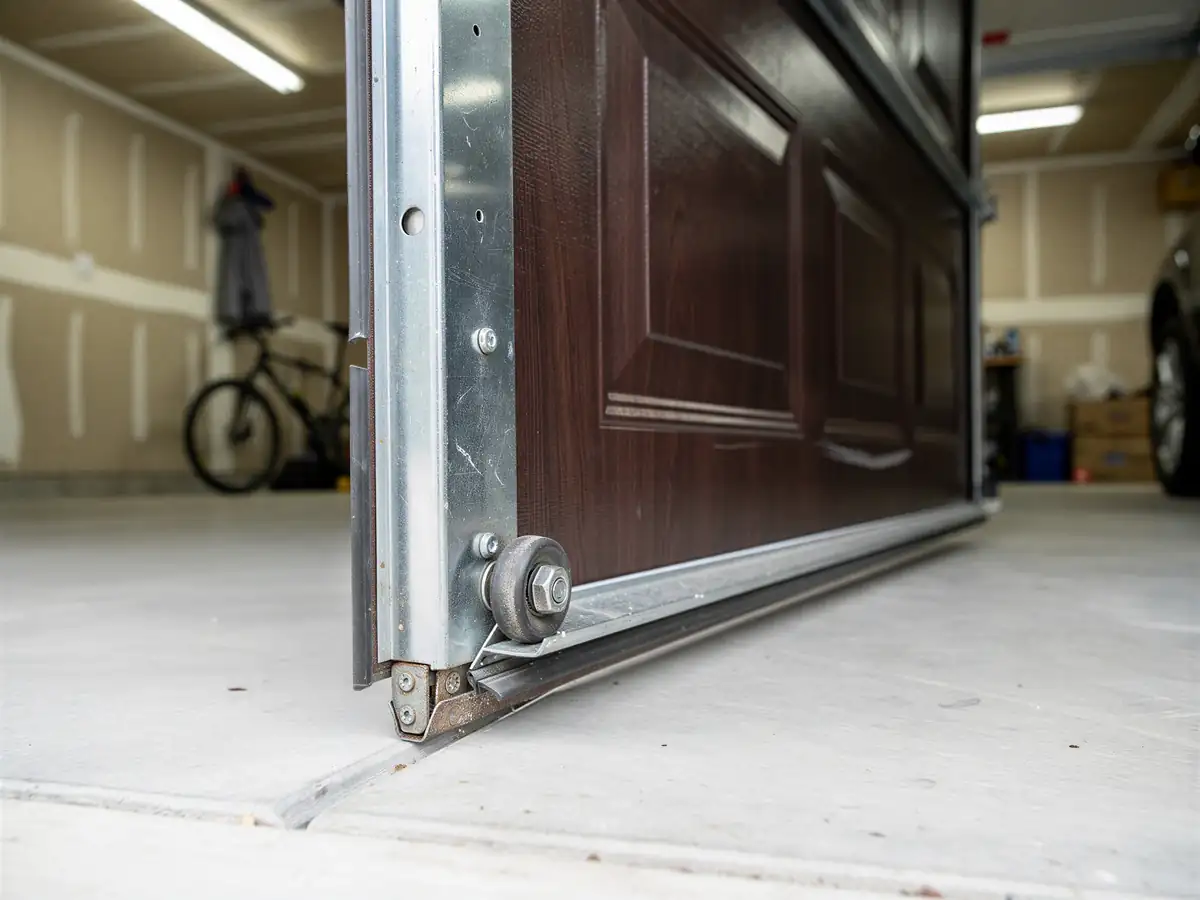
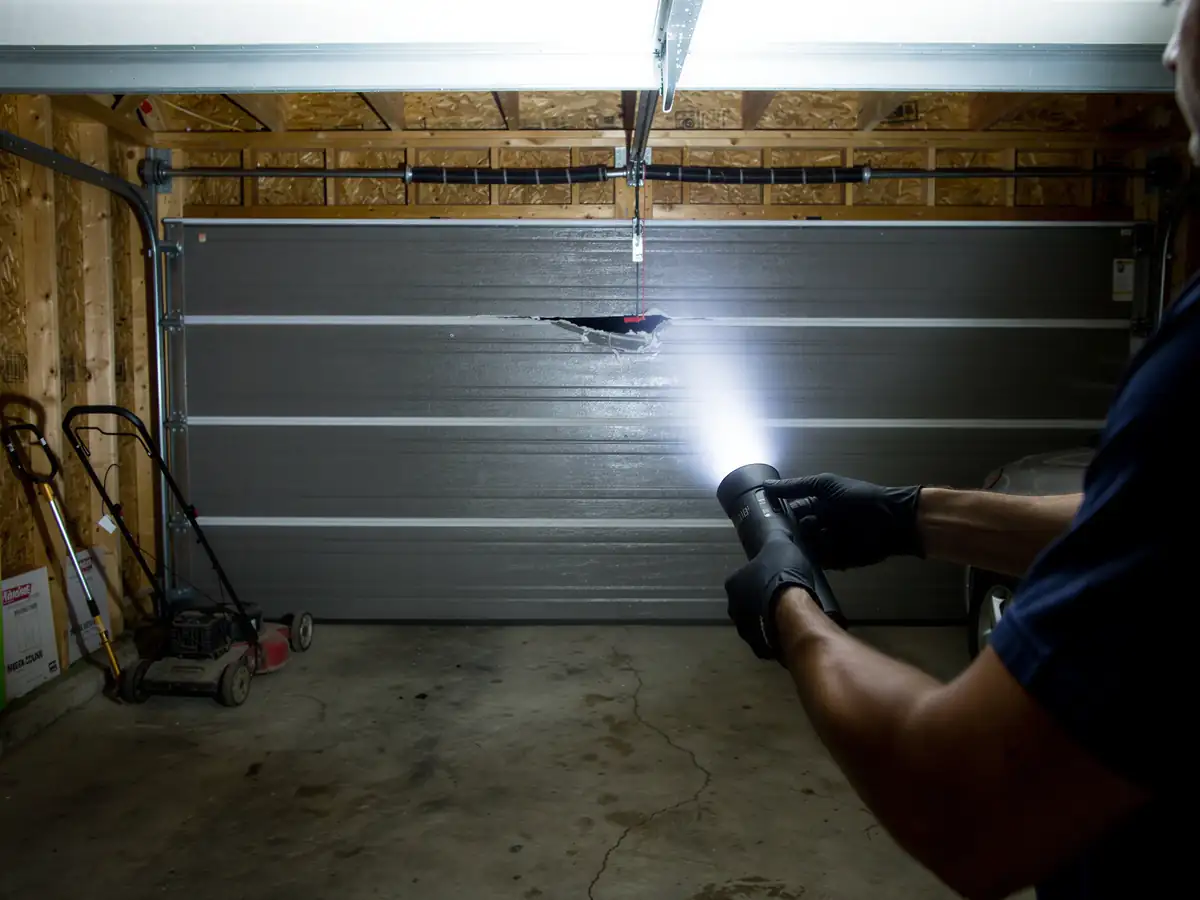
Less often, a cable frays off the drum and lets one side of the door drop while the other stays up, racking the panel sideways in the track. That one isn't safe to force shut by hand, and it isn't a job to leave for later - a racked panel under tension is how people get hurt.
What You Are Seeing
If the door won't open and the opener motor hums without moving anything, that's almost always the spring
Not the opener - the motor isn't built to lift a door without spring assistance and it won't try for long. If you hear a loud bang from the garage at some point and the door won't lift afterward, that's a spring letting go, full stop.
If the opener clicks but nothing happens
Or the lights blink in a pattern, that points to the circuit board or the sensors, not the spring. A door that reverses right before it closes, or won't close at all, is almost always a photo-eye out of alignment or dirty - check for something blocking the sensor path before you call anyone out for it.
What the Repair Takes
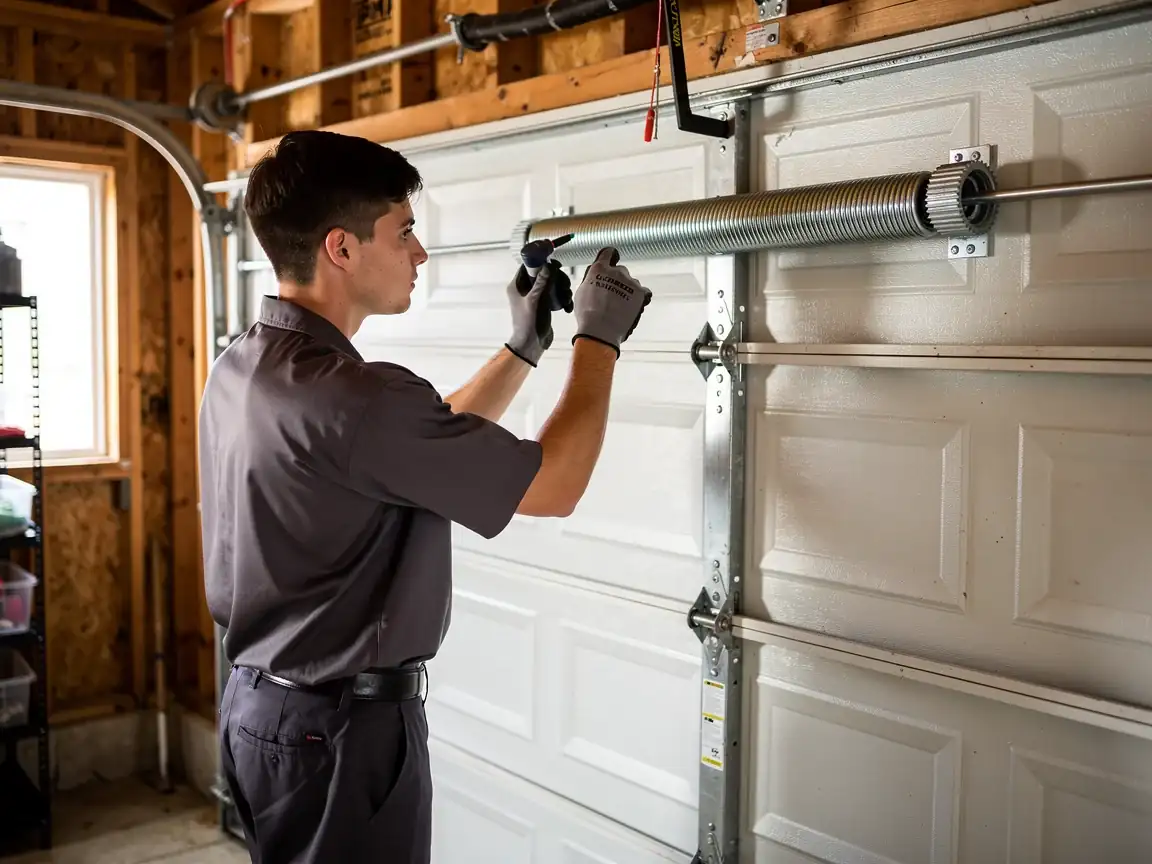
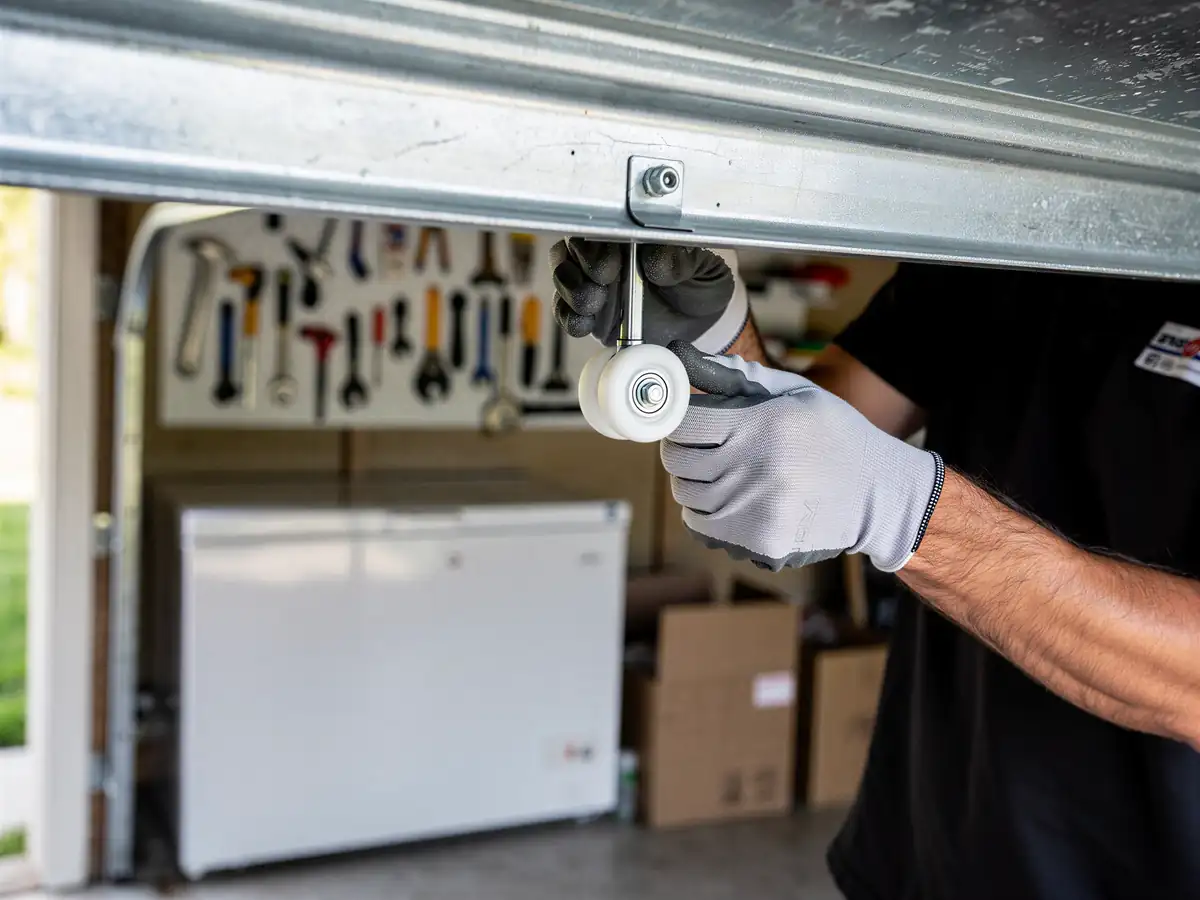
For a torsion spring, that's measuring the existing coil, matching wire gauge and wind, and replacing both springs on a double door even if only one broke - the other is the same age and won't be far behind. For an opener board issue, it's isolating whether the fault is the board, the sensors, or the wiring between them before replacing anything, since a new board on a bad wire run just fails again.
Honest limitation: if your opener is an older chain-drive model and the exact board isn't available, we'll tell you that up front rather than promise a same-day fix we can't deliver. Sometimes the more sensible move at that point is a new opener rather than chasing a board for a 20-year-old unit - we'll lay out both options and the cost difference so you can decide, not just the side that happens to make the easier job for the truck.