What Causes It Around Here
Start with the money, because it changes the advice
Brooklet's median household income runs about $47,500, well under the $55,125 median across the rest of the territory we cover. That gap matters when a torsion spring lets go on a ten-year-old steel door: at this income level, a $250-$400 spring job makes sense almost every time, but a full replacement at four figures is a harder sell than it is in the higher-income pockets of the service area.
The housing stock backs this up
Most of the broader territory was built across 1975 to 1992, with a median year of 1978 - older torsion setups, older track, older everything. Brooklet itself skews newer, with a median build year closer to 1992. That means less of the galvanized, undersized hardware you find on the 1960s and 70s stock in other named pockets of the service area, and more doors still running on their original rollers simply because the house itself is younger. Newer doesn't mean trouble-free - it means the failures tend to be wear items (rollers, cables, the odd bent track panel) rather than hardware that was already marginal when it went in.
How Long It Takes
We don't run a Brooklet branch - every job here is a truck coming out from Statesboro, about 7 miles in. That's the shortest run of the four outlying towns we cover (Portal, Metter, and Newington are all farther out), so Brooklet jobs aren't sitting at the bottom of the route sheet the way a 17 or 19-mile call might. We're not going to put a number on how fast we show up, because that depends on the day and what's already on the schedule, but geographically this is one of the easier calls to fit in.
Most single-service repairs - a spring, a cable, a roller set - are a same-visit job once we're on site. Anything that needs a special-order panel or an opener part we don't carry on the truck adds a second trip, and that's true in Brooklet the same as anywhere else we go.
What Can Go Wrong
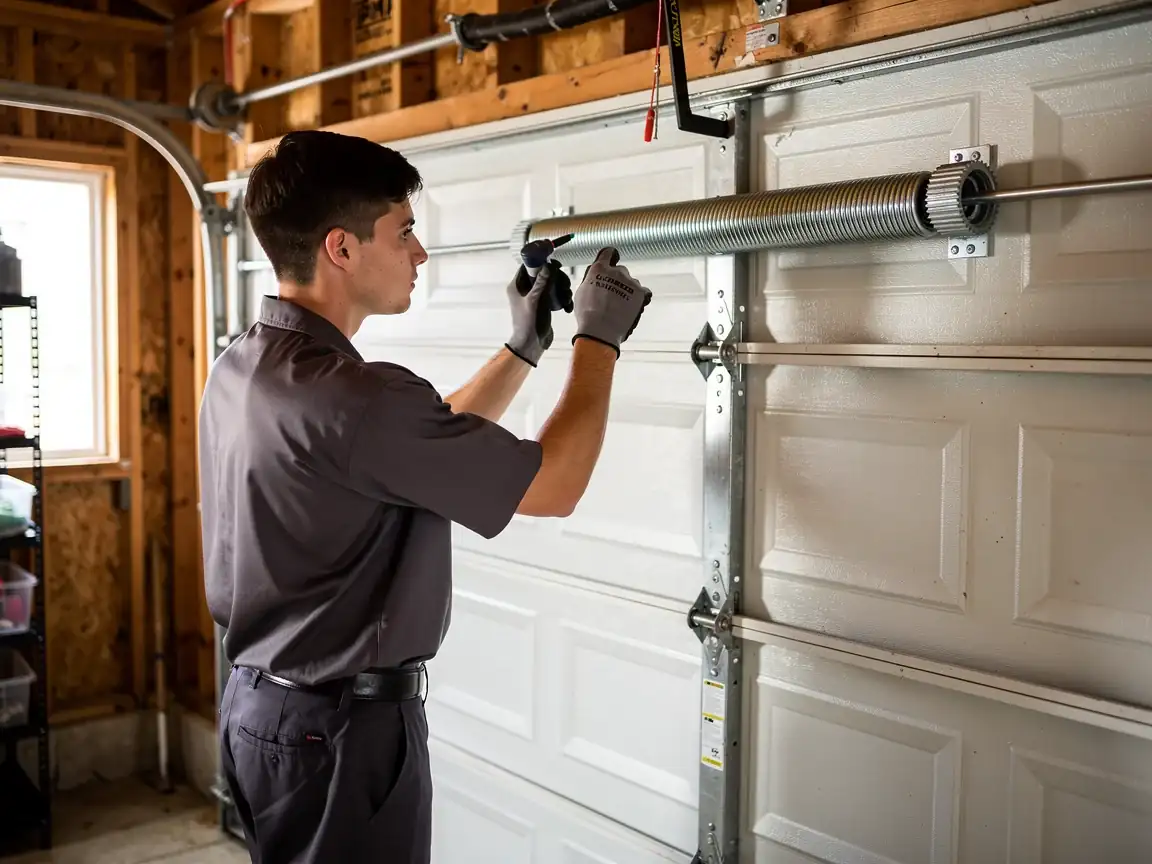
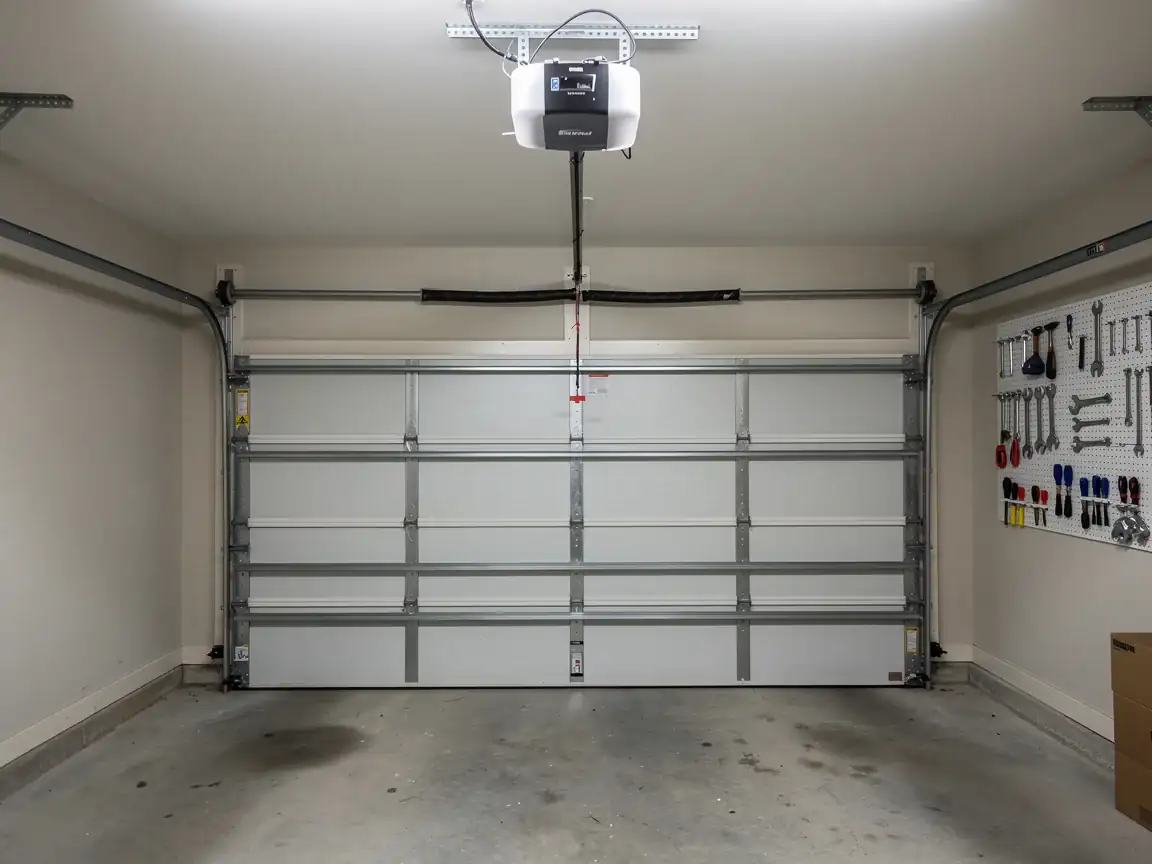
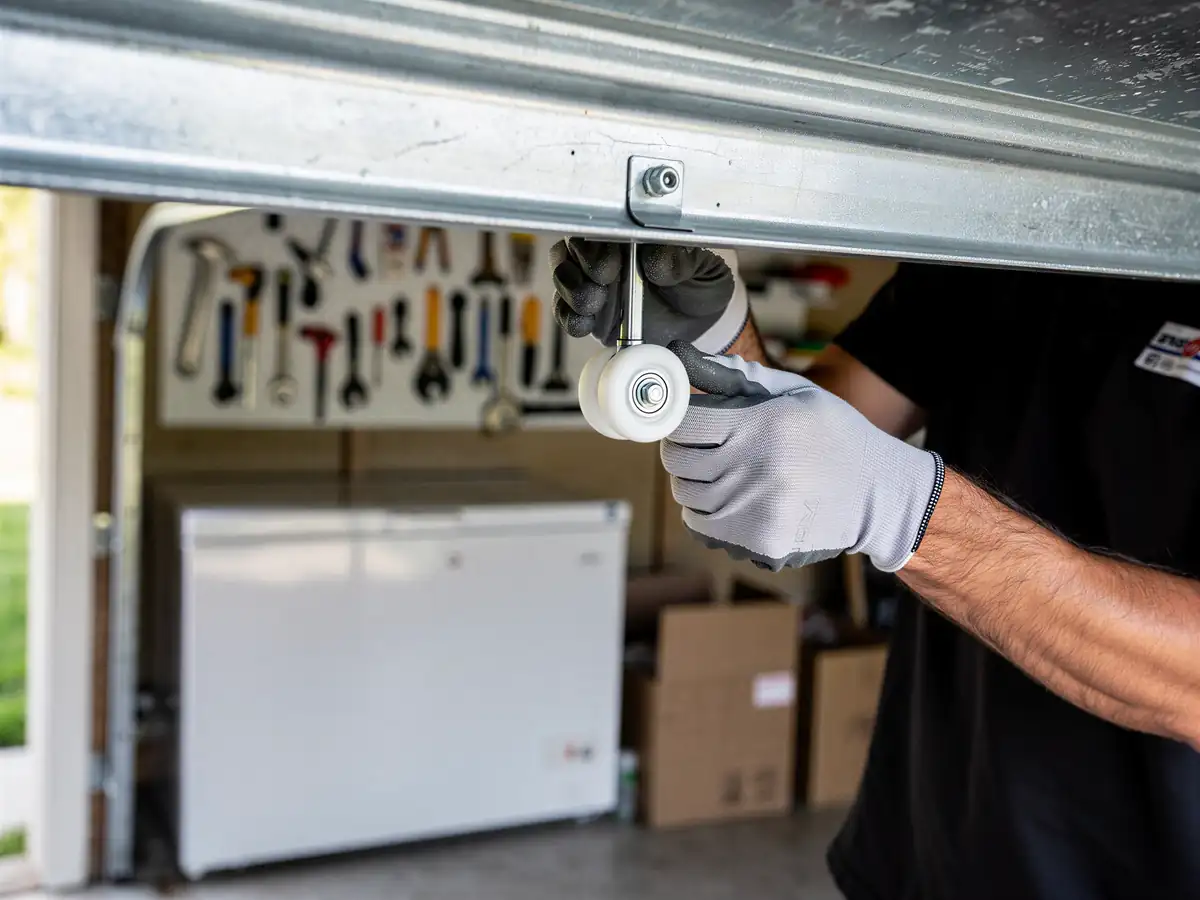
With around 906 households in Brooklet, you've got a smaller, younger pool of garage doors than most of the territory, but the failure points aren't exotic. Extension and torsion springs still wear out on a cycle count, regardless of what year the house was built. Rollers go next, especially nylon ones that were never swapped out. Cables fray at the drum if a spring has already failed and nobody caught it in time, which turns a $250 spring call into a $400+ cable-and-spring call.
The climate band here is mild with the occasional freeze, not the deep-freeze cycling that cracks hardware in colder regions. That keeps steel and torsion components from the kind of metal fatigue you'd see somewhere with harder winters, but humidity still does its slow work on unprotected springs and exposed track bolts over a couple decades.
What You Are Seeing
A door that reverses halfway up, a loud bang followed by the door refusing to move
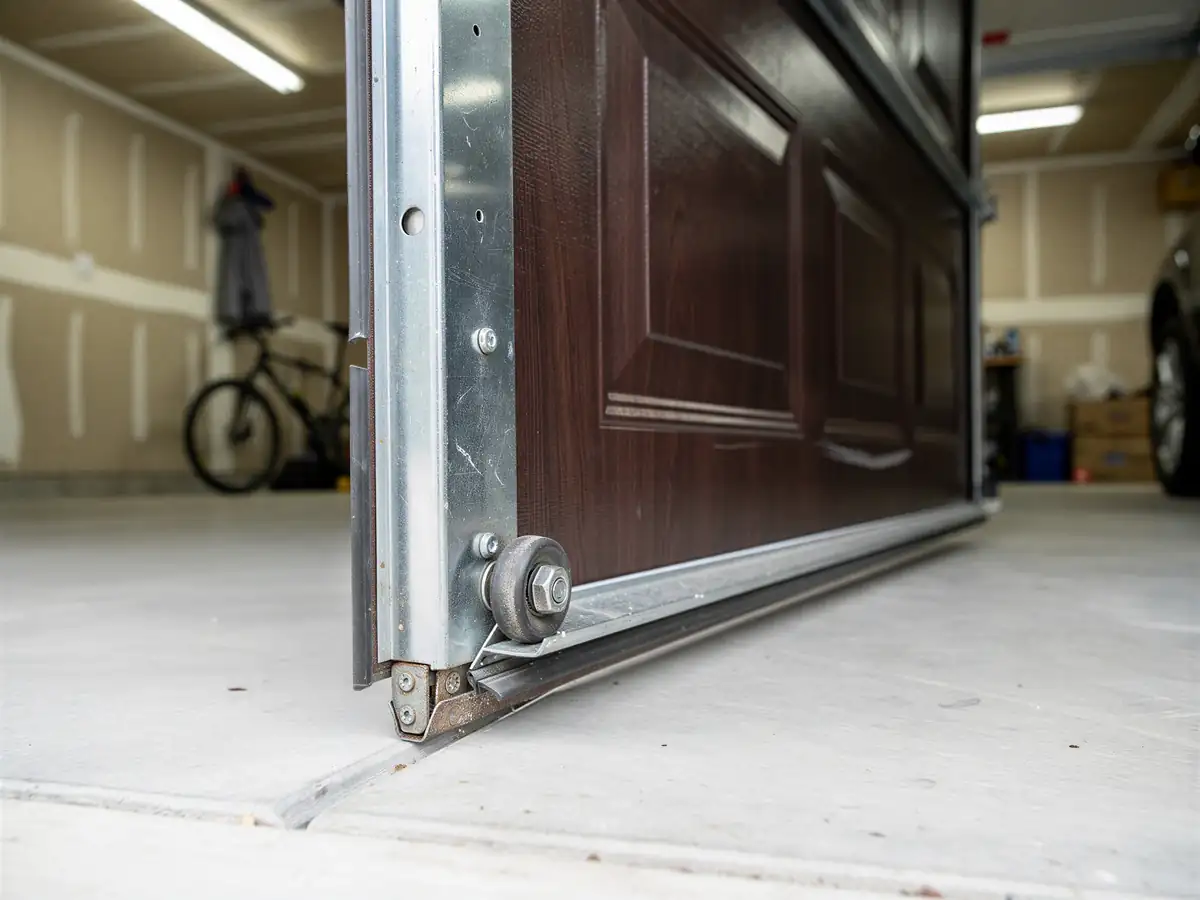
A cable hanging loose off the drum, or a door that's suddenly heavy to lift by hand - these are the calls we get out of Brooklet. Given the newer build year here, we're less likely to find the kind of undersized original hardware that shows up on 1960s stock elsewhere in the territory, and more likely to find a roller or cable that's simply reached the end of its service life on an otherwise sound door.
If the opener motor runs but the door doesn't move
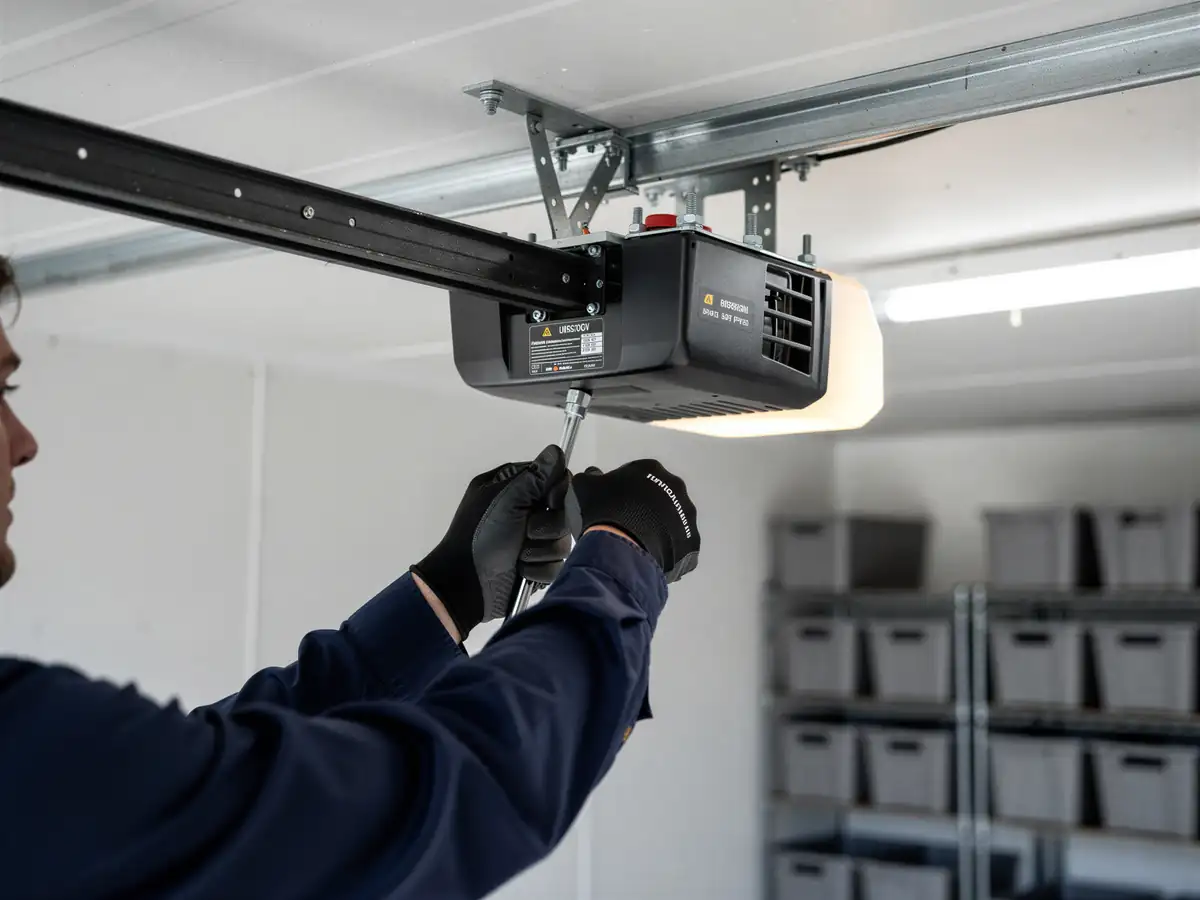
That's almost always a stripped gear or a disconnected trolley, not a spring problem - worth mentioning because the two get confused on the phone constantly.
What the Repair Takes
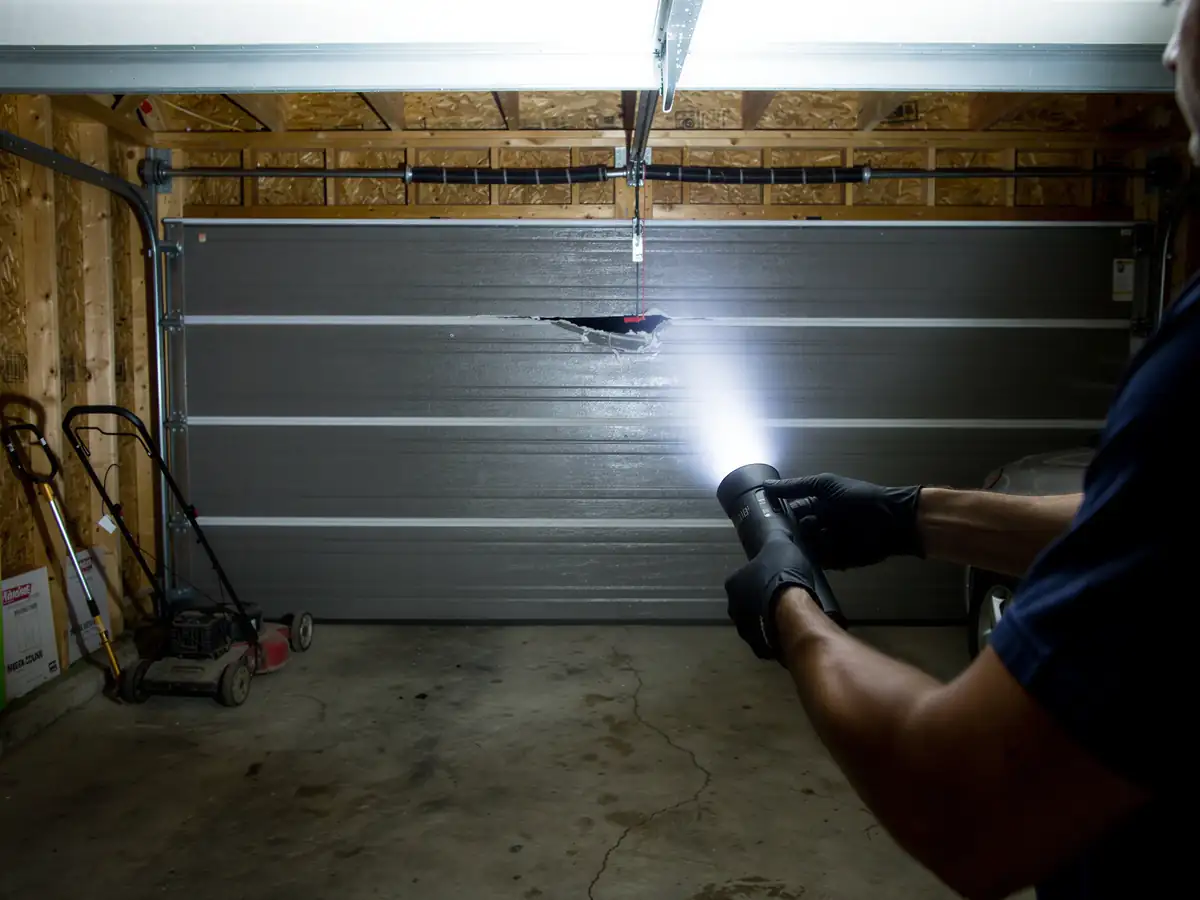
Given the income figures for Brooklet, we lean toward repair over replacement whenever the door itself is structurally sound - a bent panel on one section, a worn spring, a cable that popped. Full replacement only makes sense when the door has multiple panels damaged, the track is bent beyond adjustment, or the door predates current hardware standards badly enough that parts are hard to source.
One limitation worth being upfront about: if a part isn't something we stock on the truck - certain opener boards, some discontinued panel styles - that's a second trip, and lead time on a special-order part isn't something we control. We'll tell you up front if a job's likely to need that before we start, rather than let a one-visit job turn into two without warning.